2011 1UP.com
宝可梦如何诞生
 井部真那
井部真那 大村祐介
大村祐介 杉森建
杉森建 海野隆雄
海野隆雄Game Freak设计师谈《宝可梦 黑/白》的角色与怪物设计过程。
When Ken Sugimori first started Game Freak in the early ’80s, it was nothing but a video-game fanzine he co-created with his pal Satoshi Tajiri. Now he’s the main 2D art director on the Pokemon series, and Tajiri is famous worldwide as the man that not only gave Nintendo a billion-dollar franchise, but almost singlehandedly saved the Game Boy from irrelevancy at one point.
杉森建在80年代初刚创办Game Freak时,那不过是他和好友田尻智共同制作的一本电子游戏同人志。如今他是宝可梦系列的首席2D艺术总监,而田尻智则闻名世界,他不仅为任天堂带来了价值数十亿美元的特许经营品牌,还曾几乎凭一己之力让Game Boy免于被时代淘汰。
One would think, therefore, that the monster design process for Pokemon Black and White was a regimental, heavily overseen affair. Not so. “There’s about 17 people in our design team, and generally what happens is they each draw their own Pokemon and then they get discussed over group meetings,” he told Famitsu magazine this week. “We didn’t have a very long development cycle with this game, so I had a lot of one-on-one time with each designer.”
因此,人们可能会认为《宝可梦 黑/白》的怪物设计过程是严格管控、层层监督的。事实并非如此。他本周对《Fami通》杂志说:“我们的设计团队大约有17人,通常的情况是每个人各自画出自己的宝可梦,然后在小组会议上讨论。这款游戏的开发周期不是很长,所以我和每位设计师都有很多一对一的时间。”
“There’s no particular number that each designer needs to create,” added Takao Unno, Pokemon’s 3D art director. “But they come up with far, far more designs than actually get included in the game.”
宝可梦的3D艺术总监海野隆雄补充说:“每位设计师并没有特定的数量要求。但他们想出的设计远远多于实际被收录进游戏的数量。”
Sugimori’s main design task for Black and White was Reshiram and Zekrom, the two legendary Pokemon that appear on the box art for each game. “Those were the main ones,” he said. “We had previously decided they would be black and white dragons, and that they’d be Fire and Electric type. I wanted to have a pretty stark contrast between the two, so Reshiram was given a light, airy, ladylike design while Zekrom has a much tougher and manly look. The tails on both Pokemon are the central points of their respective designs – they’re based off of those electric turbines you see, and they give the impression that they’re these great big generators of fire or electric energy.”
杉森在《黑/白》中的主要设计任务是莱希拉姆和捷克罗姆,这两只传说的宝可梦分别出现在两款游戏的盒装封面上。他说:“那些是主要的设计。我们之前已经决定它们会是黑色和白色的龙,并且分别是火属性和电属性。我想让两者之间形成鲜明的对比,所以莱希拉姆被赋予了轻盈、优雅、淑女般的设计,而捷克罗姆则有着更加硬朗、阳刚的外观。这两只宝可梦的尾巴是各自设计的核心——它们基于你看到的那种电力涡轮机,给人一种它们是巨大的火焰或电能发生器的印象。”
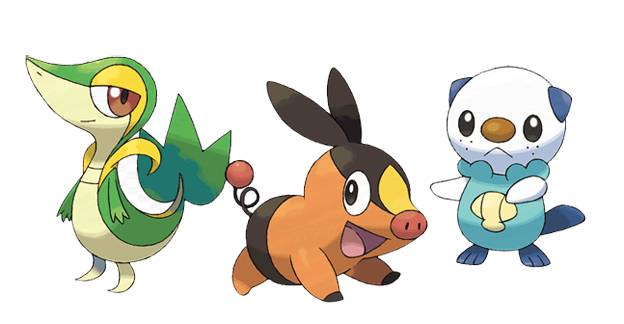
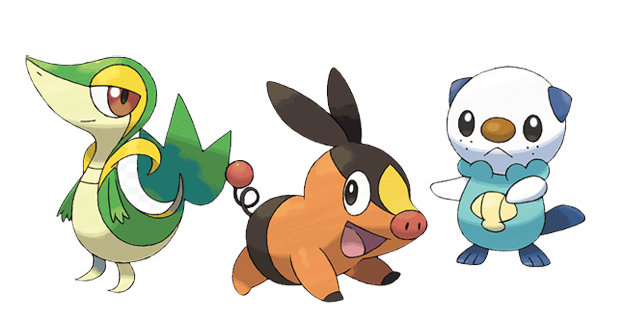
The designs for the three starter Pokemon in Black and White, meanwhile, were handled by younger staff at Game Freak. Pokabu, the Fire-type pig shown above, was conceived by Korean graphic designer Lee Hyun-Jung, who’s mostly handled art for the Pokemon Trading Card Game up to now. “The original idea with Pokabu was to have a Pokemon that figuratively looked ‘cute enough to eat’ at the start, but would eventually evolve to the point where it’d wind up eating you instead,” Lee told Famitsu. “Also, I read somewhere once that pigs wallow in mud because otherwise they have trouble regulating their body temperature, so I thought it’d be amusing if it shot fire out of its snout to do that instead.”
与此同时,《黑/白》中三只初始宝可梦的设计由Game Freak的年轻员工负责。上图中火属性的猪宝可梦暖暖猪,是由韩国平面设计师李贤贞构思的,她此前主要负责宝可梦集换式卡牌游戏的美术工作。李贤贞对《Fami通》说:“暖暖猪最初的想法是,一开始看起来‘可爱到可以吃’,但最终会进化到反过来吃掉你的程度。另外,我曾读到过猪在泥里打滚是因为不这样做就难以调节体温,所以我想如果它用鼻子喷火来调节体温会很有趣。”

A lot of thought goes into the starter Pokemon and their respective roles, as you’d expect. “Out of the first three Pokemon, we eventually decided that Tsutaja [the Grass type] would be the ‘cool’ one and Mijumaru [the Water type] would be the ‘cute’ one,” Lee said. “Pokabu wound up being more of the ‘sidekick’ sort – clumsy but lovable. He gradually evolves and matures into something a lot more reliable as you play, so it makes the effort to raise him seem pretty worth it, I think.”
正如你所料,初始宝可梦及其各自的角色定位经过了大量思考。李贤贞说:“在三只初始宝可梦中,我们最终决定藤藤蛇(草属性)是‘酷’的那只,水水獭(水属性)是‘可爱’的那只。暖暖猪则更像是‘跟班’类型——笨拙但惹人喜爱。随着游戏进行,它会逐渐进化并成熟为可靠得多的存在,所以我觉得这让培养它的努力显得很值得。”
As for Mijumaru and his evolutions, designer Yusuke Ohmura decided to make him the ‘den mother’ figure looking over the other two starters. “Janobii and Chaoboo [Tsutaja and Pokabu’s first evolutions, respectively] were already done up by the time I worked on Mijumaru’s evolutions, so I envisioned something that could get in between those two and stop them whenever they got in a fight,” he said. “For Daikenki [Mijumaru’s final evolution], I decided that a full-on change in shape would be the best. I caught a trained-seal show at the Sunshine International Aquarium in Ikebukuro around that time, and it really impressed me how strong those seals were – they just seemed so powerful, especially the sound they made when they stamped on the ground. I worked that into the design, and Daikenki was the result.”
至于水水獭及其进化型,设计师大村祐介决定让它成为照看另外两只初始宝可梦的‘保姆’角色。他说:“在我设计水水獭的进化型时,青藤蛇和炒炒猪(分别是藤藤蛇和暖暖猪的第一次进化)已经设计好了,所以我设想了一个能介入两者之间、在它们打架时阻止它们的形象。对于大剑鬼(水水獭的最终进化),我决定最好是完全改变外形。那段时间我在池袋的阳光国际水族馆看了一场训练海豹的表演,那些海豹的强壮令我印象深刻——它们看起来如此有力,尤其是它们跺地时发出的声音。我把这一点融入了设计,大剑鬼就是这样诞生的。”
When asked what the hardest part of Black/White development was, Unno and Sugimori being up the sheer amount of work animating each Pokemon proved to be. “A lot of people think that our graphic designers do nothing but the basic Pokemon portraits,” Unno said, “but they’re also responsible for the in-game pixel art and 3D sequences. Since we have the Pokemon constantly moving during battle, we had to decide how each one would act when executing this or that move, or what they should look like when they were put to sleep or whatever. It was a lot more work than I ever imagined it’d be.”
当被问及《黑/白》开发中最困难的部分时,海野和杉森都提到为每只宝可梦制作动画的工作量之大。海野说:“很多人以为我们的平面设计师只做基本的宝可梦肖像,但他们还负责游戏内的像素艺术和3D序列。由于宝可梦在战斗中不断移动,我们必须决定每只宝可梦在施展这个或那个招式时如何行动,或者它们陷入睡眠等状态时应该是什么样子。这比我预想的要多得多的工作。”
“Since you can bring in your old Pokemon after finishing the story, we also had to add new animation to all of the Pokemon in the book,” Sugimori added. “It was just a massive quantity of work, and I really respect everyone on the team for plowing through it.”
杉森补充说:“由于你可以在通关后带入以前的宝可梦,我们还必须为图鉴中所有宝可梦添加新的动画。这工作量巨大,我非常尊重团队中每一个坚持完成它的人。”