2013 GlitterBerri
宝可梦诞生前的概念设计
 杉森建
杉森建 田尻智
田尻智 宫本茂
宫本茂 增田顺一
增田顺一从《胶囊怪兽》企划书到初代《红·绿》,早期概念图揭示了宝可梦的原始构想。
Contents 本篇 37 章
宝可梦诞生之前
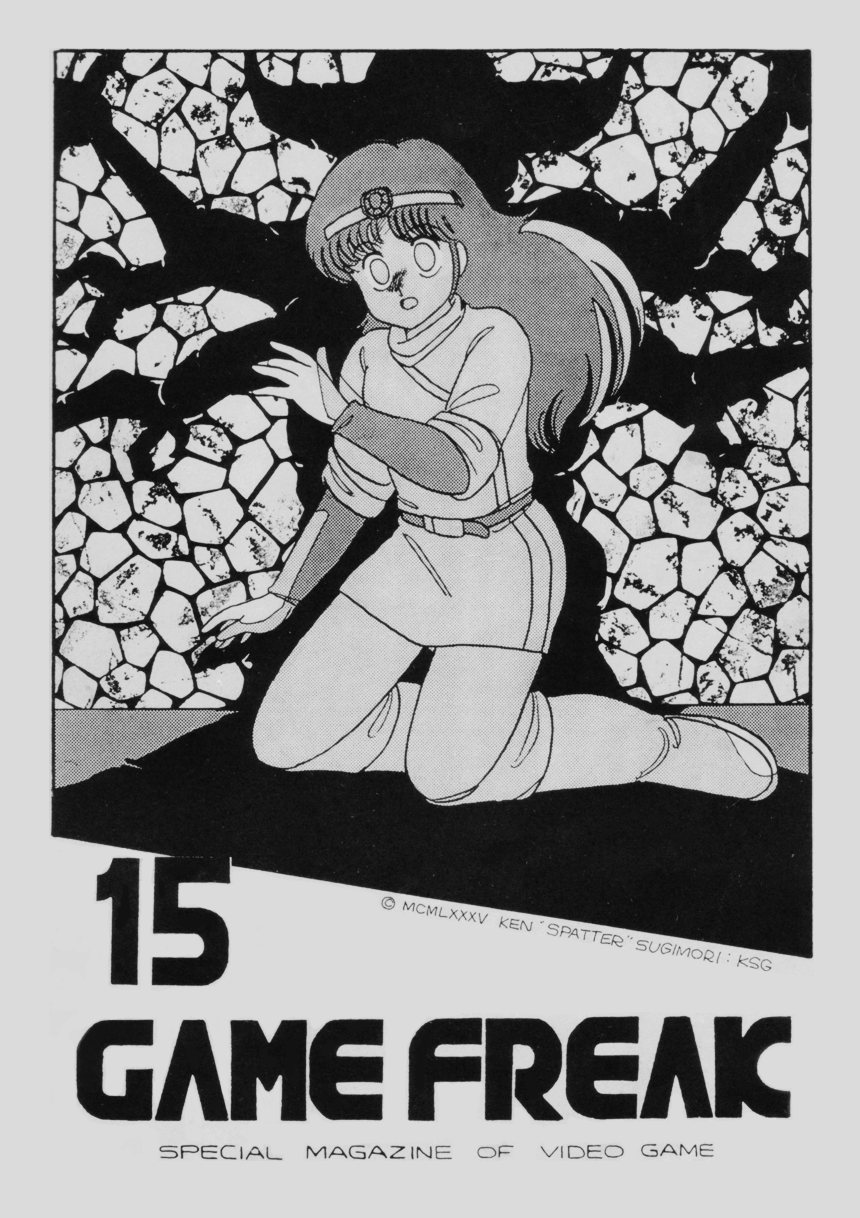
In 1989, two events happened that were important for the development of Pokémon. First off, Nintendo released the Game Boy. 5 days later, future Pokémon developers Satoshi Tajiri and Ken Sugimori turned Game Freak, their self-published gaming fanzine, into a video game company.
1989年发生了两件对宝可梦开发至关重要的事。首先,任天堂推出了Game Boy。5天后,未来的宝可梦开发者田尻智和杉森建将他们自行出版的游戏同人志Game Freak变成了一家电子游戏公司。
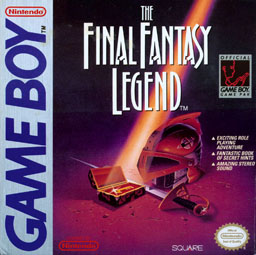
The Game Boy was originally seen as a system geared towards puzzle and action games. Indeed, the handheld saw many releases that fell into these categories. Then came the release of a Square RPG known in English as The Final Fantasy Legend. When Tajiri saw how successful it was, he realized that even non-action games were possible on a portable system.
Game Boy最初被视为一款面向益智和动作游戏的系统。事实上,这款掌机上确实发布了许多属于这些类别的作品。后来,Square的一款RPG——英文名为The Final Fantasy Legend——发售了。当田尻智看到它如此成功时,他意识到即使在便携系统上,非动作游戏也是可行的。
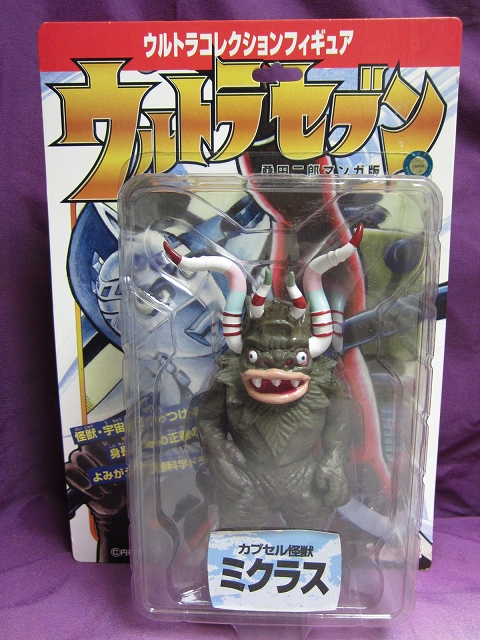
What Tajiri really had his eye on, however, was the Game Boy’s linking functionality. This data transfer system inspired the developer to dream up a game in which players would be able to trade with each other. Tajiri was also a fan of Ultra Seven, a TV fantasy series that was a followup to Ultraman, from which he got the idea of capsule monsters. He adopted the name Capsule Monsters for the RPG he set out to plan. The game, he imagined, would have monsters in containers similar to capsule toys travelling back and forth via the Game Link Cable. In the fall of 1990, Tajiri brought the project proposal he’d created to Nintendo, who decided to fund its development.
然而,田尻智真正看中的是Game Boy的联机功能。这种数据传输系统激发了这位开发者的梦想:一款玩家能够彼此交换的游戏。田尻智也是《奥特赛文》的粉丝,这部电视奇幻剧是《奥特曼》的续作,他从其中获得了胶囊怪兽的点子。他为自己着手策划的RPG采用了“胶囊怪兽”这个名字。他设想,游戏中的怪兽会像胶囊玩具一样装在容器里,通过Game Link Cable来回传输。1990年秋天,田尻智将他制作的项目企划书带到了任天堂,任天堂决定资助其开发。
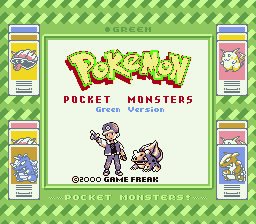
Tajiri was unable to trademark the name Capsule Monsters due to copyright issues, and the shortened version of the game’s name, Capumon, just didn’t sound very nice. Accordingly, he revised the title to Pocket Monsters, which was then shortened to “Pokémon”.
由于版权问题,田尻智无法将“胶囊怪兽”注册为商标,而游戏名称的缩写版“Capumon”听起来又不太好。因此,他将标题改为“Pocket Monsters”,后来缩写为“Pokémon”。
胶囊怪兽
So, just what did that original project proposal for Pokémon look like? In 2009, a book was released in Japan that provided us with a glimpse. Known as Satoshi Tajiri: The Man who Created Pokémon (ISBN: 4840127751), it covered the development history of a number of Game Freak games, including the early Pokémon titles.
那么,宝可梦最初的那份项目企划书到底是什么样的呢?2009年,日本出版了一本书,让我们得以一窥究竟。这本书名为《田尻智:创造宝可梦的男人》(ISBN: 4840127751),书中涵盖了许多Game Freak游戏的开发历史,包括早期的宝可梦作品。
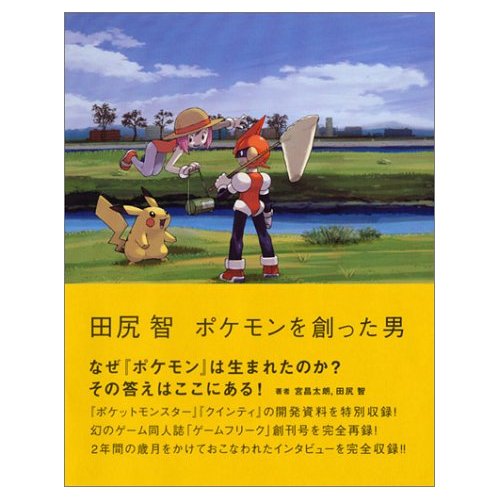
I initially found a cache of images from this book on an alternative gaming news site called Tikisaurus. I searched around the web to find a couple more, and combined it with previously-translated developer interviews to bring you a look at Pokémon’s early history!
我最初是在一个名为Tikisaurus的另类游戏新闻网站上发现了这本书中的一批图片。我在网上四处搜索,又找到了几张,并将其与之前翻译过的开发者访谈结合起来,为您呈现宝可梦的早期历史!
田尻智的宝可梦构想
标题页
译者注
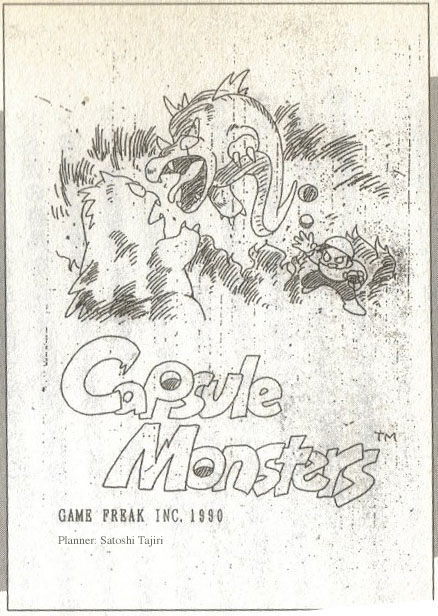
Let’s start by taking a glimpse at the title page of Capsule Monsters’ project proposal. These unfamiliar monsters may be early designs for existing Pokémon, many of whom went through significant redesigns. (More on that later.)
我们先来看一眼《胶囊怪兽》企划书的标题页。这些陌生的怪兽可能是现有宝可梦的早期设计,其中许多后来都经历了大幅重新设计。(详情后述。)
Another possibility is that they are Pokémon that were not ultimately not included in the final games. Tajiri and Sugimori went into further detail about this aspect in an interview on Nintendo of Japan’s website. (Click the names to see the translated source for each quote.)
另一种可能是,它们是最终未被收录进正式游戏的宝可梦。田尻智和杉森建在日本任天堂网站的一次采访中对此有更详细的说明。(点击人名可查看每段引文的翻译出处。)
杉森建
“Memory capacity and deciding on a good number of characters became an issue. We actually wanted to have more. We designed around 1.5 times more characters than we actually used.”
“内存容量和确定合适的角色数量成了问题。我们其实想做得更多。我们设计的角色数量大约是我们实际使用的1.5倍。”
田尻智
We designed more than 200 Pokémon for the first games, then whittled them down to 150. The way we’ve approached things is to develop whatever we want without paying any heed to how much memory is available, cutting down on Pokémon we can’t fit in later on.
我们在初代游戏中设计了200多只宝可梦,然后削减到150只。我们的做法是,先不管内存够不够,想做什么就做什么,之后再砍掉塞不进去的宝可梦。
Now let’s take a peek at the second page, a preface which outlines what Sugimori and Tajiri were hoping for Pokémon to become.
现在我们来看第二页,这是一篇前言,概述了杉森建和田尻智希望宝可梦成为什么样子。
设计前提
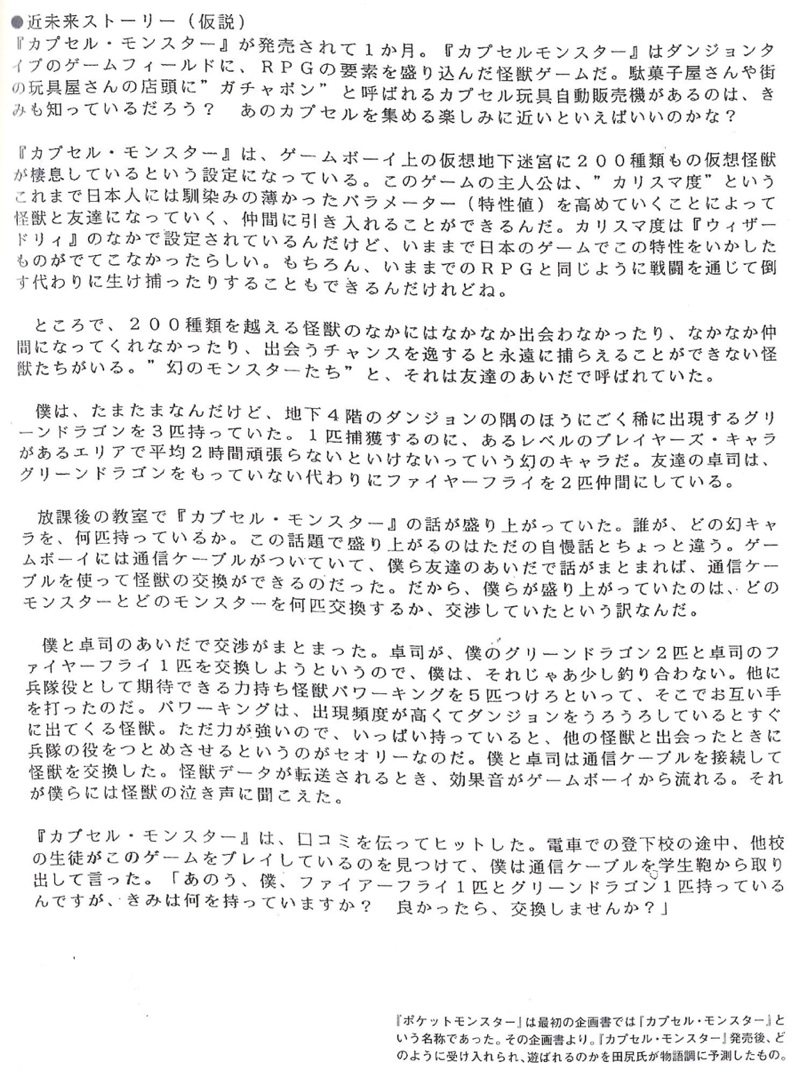
A (Hypothetical) Story Set in the Not-So-Distant Future…
一个(假想的)发生在不远未来的故事……
It’s been a month since the release of Capsule Monsters, a monster game that incorporates RPG elements into a dungeon-covered overworld. You know those vending machines that sit in front of candy stores and toy shops selling capsule toys called “gashapon”, right? I guess I could describe the game as being similar to the excitement you get from collecting those capsules.
《胶囊怪兽》发售已经一个月了,这款怪兽游戏将RPG元素融入了遍布地下城的俯视地图。你知道糖果店和玩具店门前那些卖扭蛋胶囊玩具的自动售货机吧?我想,这款游戏带来的兴奋感,大概就类似于收集那些胶囊时的感觉。
In Capsule Monsters, 200 types of virtual monsters live in equally virtual underground dungeons on the Game Boy. The game’s hero can befriend these monsters and win them over to his side by increasing his Charisma, a game parameter not yet widely known among Japanese audiences. Charisma is featured in the Wizardry series, but it seems like Japanese games have yet to make use of it. Naturally, Capsule Monsters also allows you to capture creatures alive rather than defeating them in battle, as you’ve done in RPGs up till now.
在《胶囊怪兽》中,200种虚拟怪兽生活在Game Boy上同样虚拟的地下迷宫里。游戏的主角可以通过提升自己的“魅力”来与这些怪兽交朋友、把它们拉拢到自己这边——“魅力”这一游戏参数当时在日本玩家中还不太为人所知。《巫术》系列中有“魅力”这一设定,但日本游戏似乎还没有用上它。当然,《胶囊怪兽》也允许你活捉生物,而不是像此前的RPG那样在战斗中击败它们。
The roster of over 200 types of monsters includes creatures that you won’t necessarily encounter, creatures who will choose not to ally with you, and creatures who you’ll miss the chance to encounter entirely, and thus never be able to catch. My friends and I call these “illusory monsters”.
超过200种怪物的阵容中,包含了你未必会遇到的生物、会选择不与你结盟的生物,以及你完全错失相遇机会、因而永远无法捕捉的生物。我和朋友们称这些为“幻影怪物”。
It just so happens that I have three Green Dragons, which only appear very rarely in the corner of an underground dungeon, four levels down. In order to catch just one of these illusory monsters, players of a certain level have to spend an average of 2 hours wandering around a particular area. My friend, Takuji, doesn’t have any Green Dragons, but he is allied with 2 Fireflies instead.
碰巧我有三只绿龙,它们极少出现在地下城深处第四层的角落里。为了捕捉到这样一只幻影怪物,一定等级的玩家平均需要在特定区域徘徊2小时。我的朋友Takuji没有绿龙,但他与2只萤火虫结盟了。
In class, discussion about Capsule Monsters really heats up after the bell rings. Who has which illusory characters? How many? We’re not just bragging, exactly. Once my friends and I come to an agreement, we connect our Game Boys via Link Cable and then we can use it to trade monsters. That’s why we get excited, because we’re negotiating which monsters to trade for what, and how many.
课堂上,铃声响起后,关于胶囊怪兽的讨论才真正热烈起来。谁拥有哪些幻影角色?有多少?我们并不只是在炫耀。一旦我和朋友们达成一致,我们就会通过连接线连接我们的Game Boy,然后就可以用它来交换怪物。这就是我们兴奋的原因,因为我们正在协商用什么怪物交换什么,以及数量多少。
Takuji and I finally finished negotiating. He’d agreed to trade one of his Fireflies for two of my Green Dragons. But I still felt like our exchange was a little unbalanced. I asked if he wouldn’t mind adding 5 Powerkings, monsters with the strength you might expect to see in soldiers, and we finally struck a bargain. Powerkings have a high encounter rate, and you’ll quickly run into them if you wander around dungeons. They’re strong, though, and the theory is that, if you have a lot of them, you can put them to work as soldiers when you run into other monsters. Takuji and I hooked up the Link Cable and traded monsters. The Game Boy plays sound effects as the monster data is being transferred, so we could hear the monsters’ cries.
Takuji和我终于完成了协商。他同意用他的一只萤火虫换我的两只绿龙。但我仍然觉得我们的交换有点不平衡。我问他是否介意再加上5只力量王——这种怪物的力量就像士兵一样——我们最终达成了协议。力量王的遭遇率很高,如果你在地下城四处走动,很快就会遇到它们。不过它们很强,理论上,如果你有很多,当你遇到其他怪物时,可以把它们当作士兵来使用。Takuji和我连接了连接线并交换了怪物。Game Boy在传输怪物数据时会播放音效,所以我们可以听到怪物的叫声。
Word of mouth has turned Capsule Monsters into a hit. While I was riding the train to school, I discovered that students from other schools played too. I pulled my Link Cable out of my school bag as I addressed them. “Excuse me,” I said. “I have a Firefly and a Green Dragon. What do you guys have? How about a trade?”
口碑让胶囊怪兽大受欢迎。当我坐火车去学校时,我发现其他学校的学生也在玩。我从书包里拿出连接线,对他们说:“打扰一下,我有一只萤火虫和一只绿龙。你们有什么?交换怎么样?”
译者注
Regarding the type of gameplay that was intended for Capsule Monsters, Sugimori had this to say:
关于胶囊怪兽原本设想的游戏玩法类型,杉森建是这样说的:
杉森建
At first, the game was more RPG-like. It was only in the middle of development that the goal of the game became completing your Pokédex.
起初,游戏更像RPG。直到开发中期,游戏的目标才变成完成你的宝可梦图鉴 App。
You also may have noticed that the design proposal makes no mention of two separate versions. This is because the idea for the split originated later in development, on the recommendation of Miyamoto himself.
你可能也注意到了,设计提案中没有提到两个不同的版本。这是因为分版本的想法是在开发后期,根据宫本茂本人的建议才产生的。
田尻智
In the beginning, the original Pokémon didn’t have different variations such as Red and Blue. I took the advice of Miyamoto and split it into two, something that was a first for us.
一开始,最初的宝可梦并没有红和蓝这样的不同版本。我接受了宫本茂的建议,将其分成两个版本,这对我们来说是第一次。
As for Miyamoto’s reasons, well…
至于宫本茂的理由,嗯……
宫本茂
I didn’t suggest splitting the games because it would allow us to sell more copies of the same thing. I just thought it would be more fun for the players if, say, there were 3 siblings and they all owned something unique. That way, they’d be able to communicate. I didn’t want to release separate versions of the games just to increase the marketability.
我提议将游戏分成两个版本,并不是为了能卖出更多份相同的东西。我只是觉得,如果比如说有3个兄弟姐妹,他们各自拥有一些独特的东西,这样会更有趣。这样一来,他们就能互相交流了。我并不想仅仅为了提高市场销量而发行不同的游戏版本。
与宝可梦一起冒险
译者注
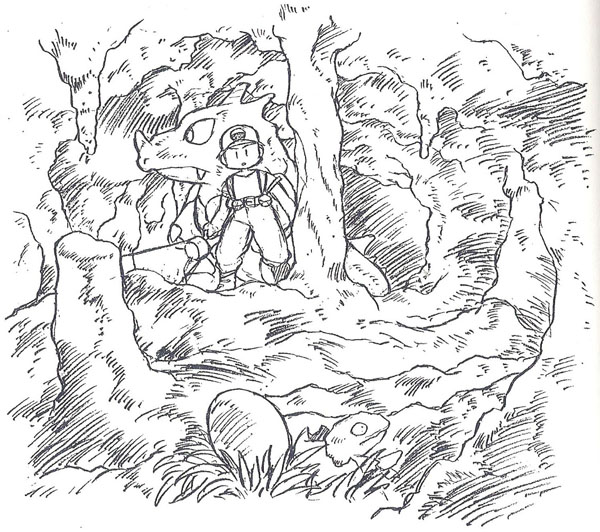
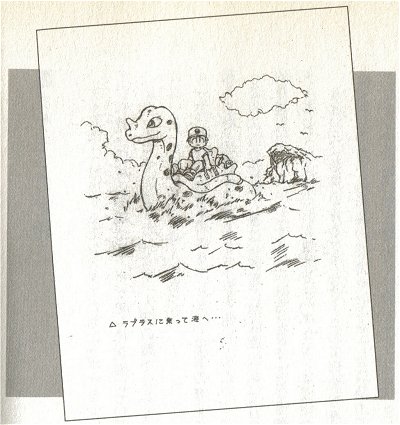
In accordance with the caption, Masuda had this to say on the role of Pokémon:
根据图注,增田顺一对宝可梦的角色有这样的说法:
增田顺一
At first, the protagonist and his Pokémon had a human-pet relationship. When we started making the game, however, we wondered whether it wouldn’t be better if they were more like friends.
起初,主角和他的宝可梦之间是人与宠物的关系。然而,当我们开始制作游戏时,我们想,如果他们更像朋友会不会更好。
In addition, the two Pokémon seen above were some of the first created.
此外,上面看到的两只宝可梦是最早创作出来的一批。
杉森建
The first Pokémon were Rhydon, Clefairy, and Lapras. At first, we’d planned to have Pokémon living alongside humans, making their lives easier. So, during the early stages of development, many of the characters we came up with had clear roles, like carrying things around or sailing across the sea with people on their backs.
最早的宝可梦是独角犀牛、皮皮和拉普拉斯。起初,我们计划让宝可梦与人类共同生活,让他们的生活更轻松。所以,在开发的早期阶段,我们想出的许多角色都有明确的分工,比如搬运东西或载着人横渡大海。
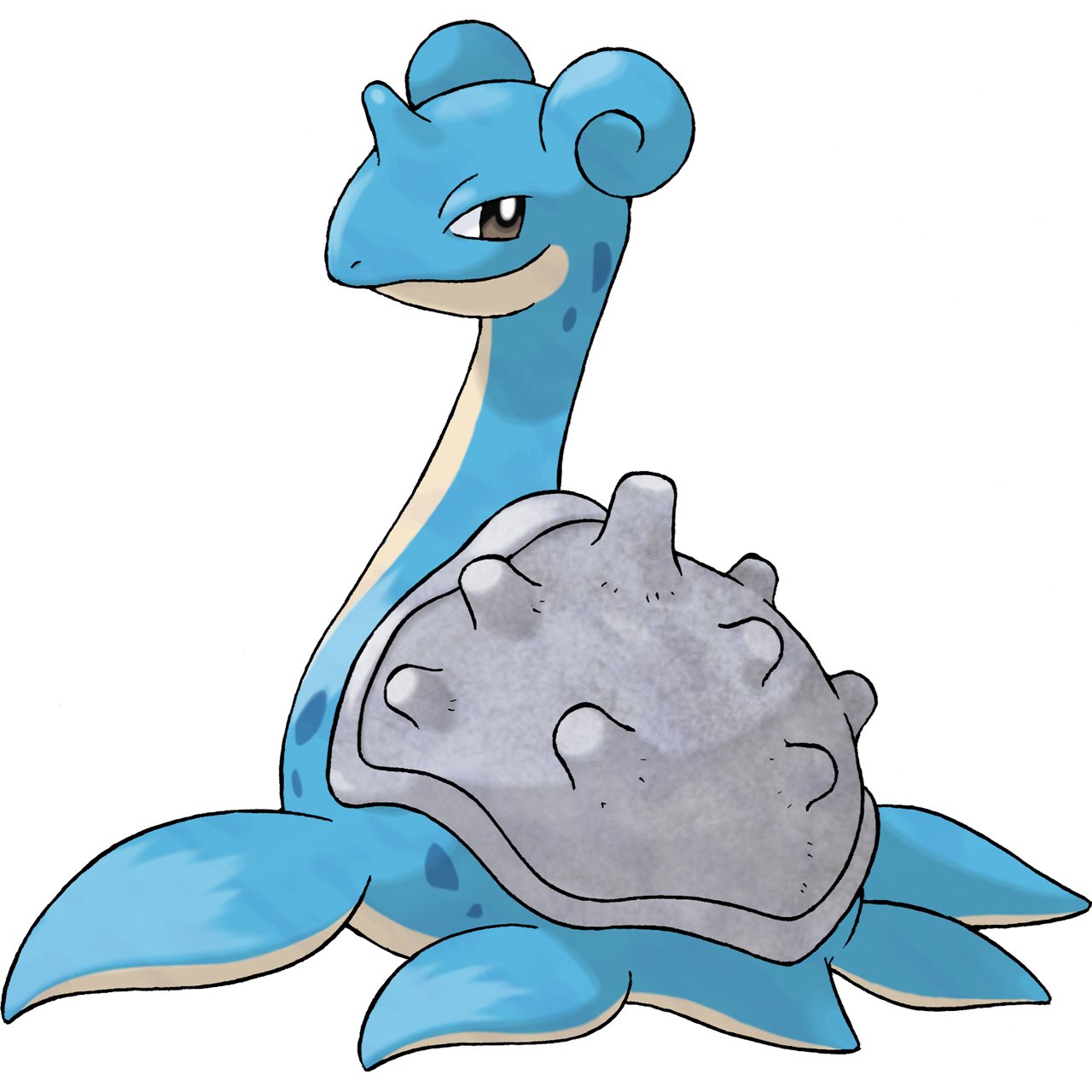
Lapras was obviously an example of the latter. The idea of Pokémon living and working alongside humans isn’t really fully fleshed out in the first generation of games. The only Pokémon seen performing a role other than that of a battling monster or pet is the Machop helping out with construction in Vermillion City. Lapras’ design also went through some minor changes, with the Pokémon gaining ears and losing some of its resemblance to the Loch Ness monster.
拉普拉斯显然是后者的例子。宝可梦与人类共同生活和工作的想法在第一代游戏中并没有完全展开。除了作为战斗怪物或宠物之外,唯一看到扮演其他角色的宝可梦是在枯叶市帮忙建设的腕力。拉普拉斯的设计也经历了一些小改动,这只宝可梦长出了耳朵,并且不再那么像尼斯湖水怪。
训练家之间的战斗
译者注
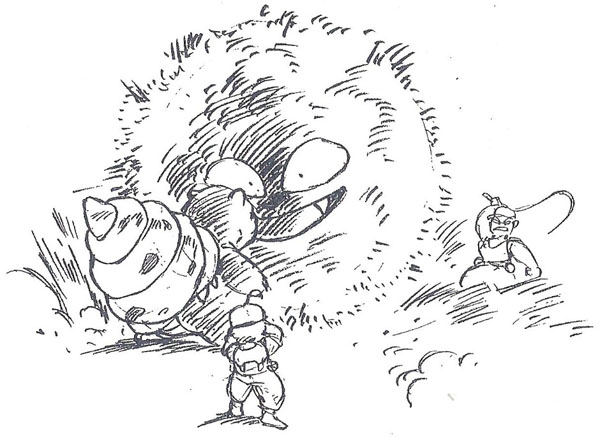
While the Japanese picture is titled Gousu (Gastly) vs. Yadon (Slowpoke), the scene depicts Gastly battling Yadoran (Slowbro). It seems that Slowbro was originally called Yadon and only later renamed Yadoran. This may be because when Slowpoke was created, it bumped Slowbro up an evolutionary notch and stole its name.
虽然日文图片的标题是“Gousu(鬼斯)对 Yadon(呆呆兽)”,但画面描绘的是鬼斯与 Yadoran(呆壳兽)战斗。看来呆壳兽原本叫 Yadon,后来才改名为 Yadoran。这可能是因为呆呆兽被创作出来时,把呆壳兽往上挤了一个进化位阶,并抢走了它的名字。

As you can see, Gastly’s trainer has a whip, perhaps indicating a more hands-on approach to participation in Pokémon battles. These whips are preserved in several trainer sprites in Red/Blue/Green, including the Cooltrainers, Rockets, Rockers, and Tamers, as well as Sabrina. Perhaps their designs are leftovers of the concept.
如你所见,鬼斯的训练家拿着鞭子,或许表明当时对参与宝可梦对战有更亲力亲为的设想。这些鞭子在《红/蓝/绿》的多个训练家精灵图中保留了下来,包括精英训练家、火箭队、摇滚乐手和驯兽师,以及娜姿。也许它们的设计是这一构想的遗留。
杉森建
At one time, the protagonist would fight as well. But then we asked ourselves “If you can fight on your own, what’s the point of having Pokémon?”
曾经有一段时间,主角自己也会战斗。但后来我们问自己:“如果你能自己战斗,那还要宝可梦干什么?”
Pokémon fist fights…? I wonder how that would have fared with the censors.
宝可梦拳斗……?我很好奇这在审查那里会怎么样。
宝可梦之间的战斗
译者注
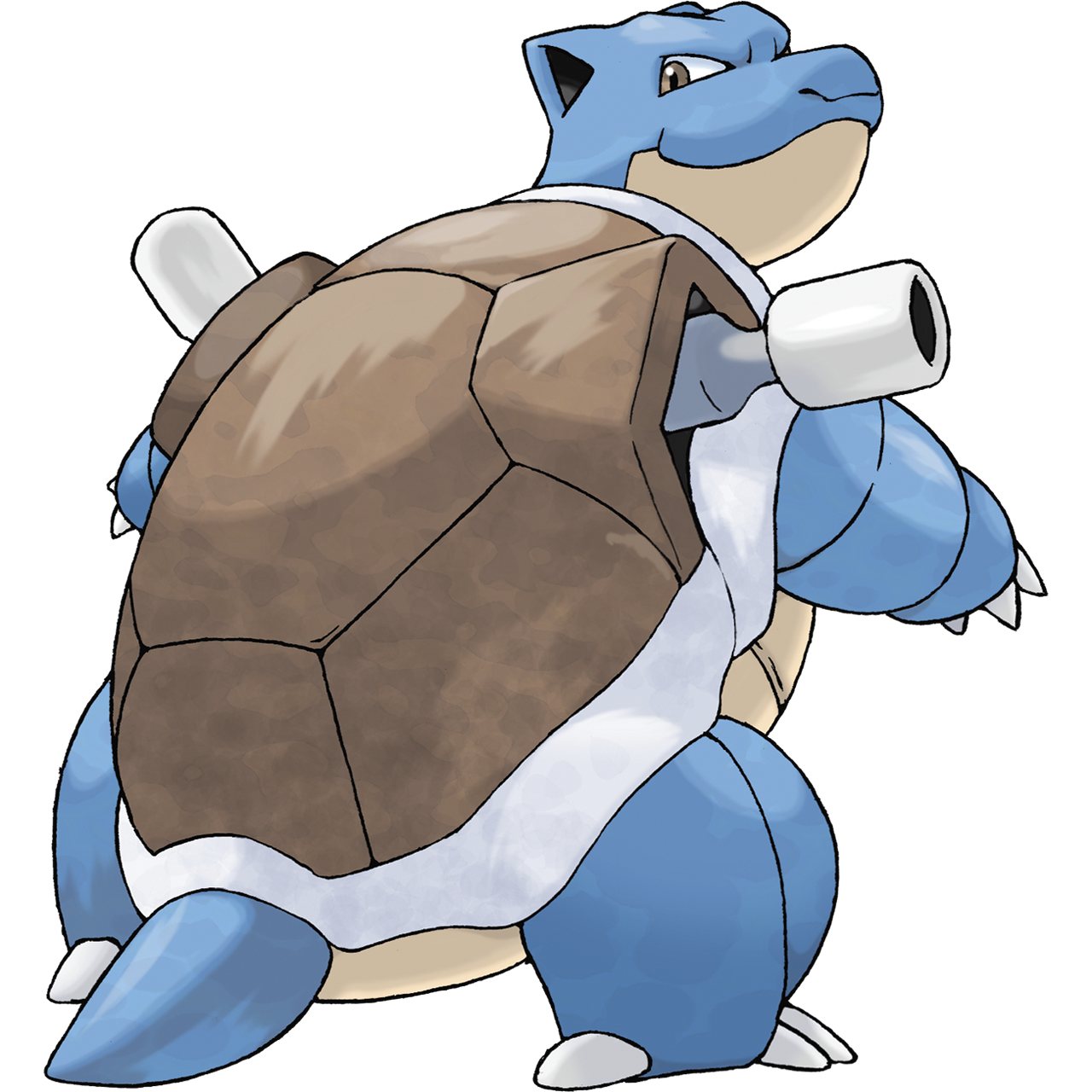
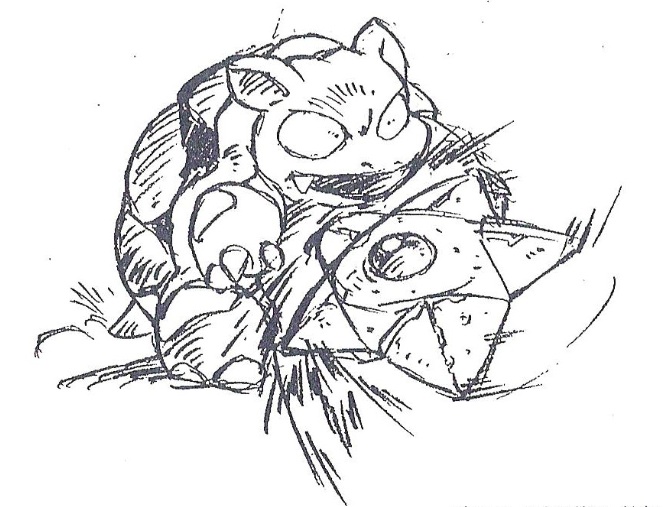
The Japanese name for Blastoise is Kamekkusu, but this picture calls him Karabajio. This is romanized to Caravaggio, the name of a famous painter who lived in Italy during the Renaissance. The Blastoise in this picture lacks shoulder cannons.
水箭龟的日文名是 Kamekkusu,但这张图里叫它 Karabajio。这被罗马化为 Caravaggio,即文艺复兴时期生活在意大利的著名画家卡拉瓦乔的名字。这张图里的水箭龟没有肩炮。
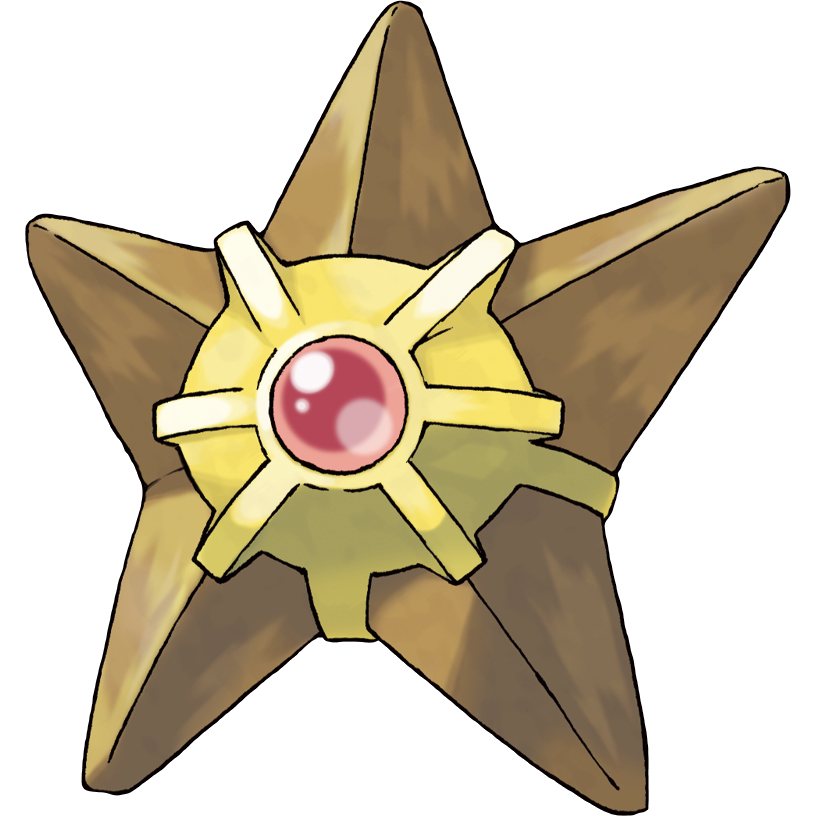
Likewise, Staryu’s Japanese name is Hitodeman, but here it is called Mimii. The origin of this name is unknown. The Staryu in this picture is missing its gold enameling.
同样,海星星的日文名是 Hitodeman,但这里叫它 Mimii。这个名字的来源不明。这张图里的海星星缺少金色珐琅。
生活中的一天
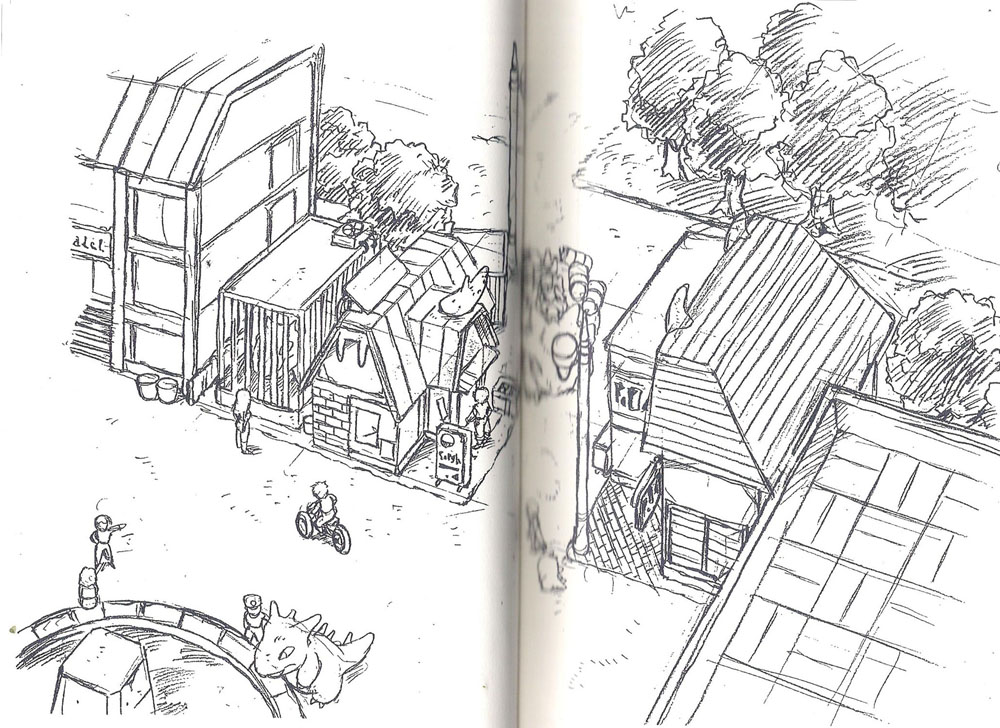
译者注
As can be evidenced by the pictures we’ve seen so far, Pokémon were originally quite reptilian in nature. Indeed, Sugimori has confirmed this in an interview:
从我们目前所见的图片可以看出,宝可梦最初在本质上相当像爬行动物。事实上,杉森建在一次采访中证实了这一点:
杉森建
At first, Pokémon were more dinosaur-like than the ones you see today.
起初,宝可梦比你们今天看到的更像恐龙。
In Red & Blue, all Pokémon have an unseen index number used to identify them in the game’s ROM that differs from their number in the Pokédex. This numbering system seems to have some connection to the order that the Pokémon were created in. However, the list does have some irregularities, such as spaces where Pokémon were removed from the list, which now result in Missingno. Mew, the last Pokémon added to the game, is number #21, because it was fit into one of these empty spaces.
在红·绿中,所有宝可梦都有一个隐藏的索引编号,用于在游戏ROM中识别它们,这个编号与它们在宝可梦图鉴App中的编号不同。这个编号系统似乎与宝可梦被创作出来的顺序有一定关联。然而,这份列表确实存在一些不规则之处,比如有些位置因为宝可梦被从列表中移除而空了出来,如今这些空缺导致了Missingno的出现。超梦作为最后被加入游戏的宝可梦,编号是#21,因为它被塞进了其中一个空缺位置。
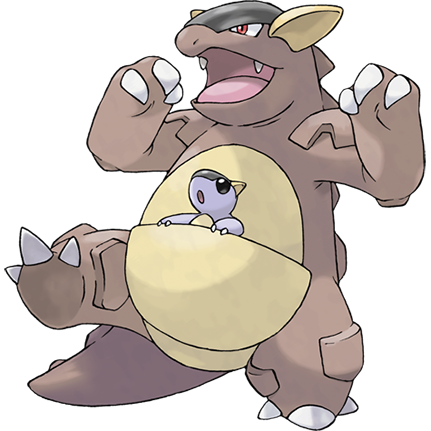
Rhydon, Clefairy, and Lapras, who Sugimori previously mentioned were the first Pokémon to be created, are #1, #4, and #19, respectively. Other Pokémon whose early conception is evidenced by their appearance in this planning document are Nidoran ♂ (#3), Slowbro (#8), Gengar (#14), Gastly (#25), Staryu (#27), and Blastoise (#28). While only some of these Pokémon could be said to be similar to dinosaurs, many other early-numbered creatures such as Kangaskhan (#2), Nidoking (#7), Ivysaur (#9), Nidoqueen (#16), and Gyarados (#22) seem to adhere to this principle.
杉森建之前提到的最早被创作出来的宝可梦——独角犀牛、皮皮和拉普拉斯,编号分别是#1、#4和#19。其他因出现在这份企划文档中而证明其早期构思的宝可梦还有尼多朗♂(#3)、呆壳兽(#8)、耿鬼(#14)、鬼斯(#25)、海星星(#27)和水箭龟(#28)。虽然这些宝可梦中只有一部分可以说与恐龙相似,但许多其他编号靠前的生物,如袋兽(#2)、尼多王(#7)、妙蛙草(#9)、尼多后(#16)和暴鲤龙(#22),似乎也遵循这一原则。
交换宝可梦
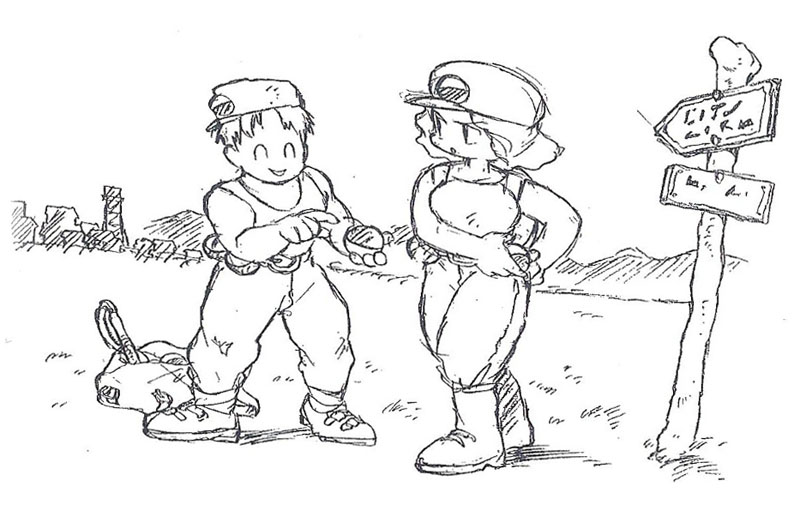
“Wanna trade for this guy?”
“想用这家伙交换吗?”
“For a Nidoran? Don’t be ridiculous!”
“换一只尼多朗?别开玩笑了!”
交换分镜
Link Transfer Animation Storyboard (1)
连接传输动画分镜(1)
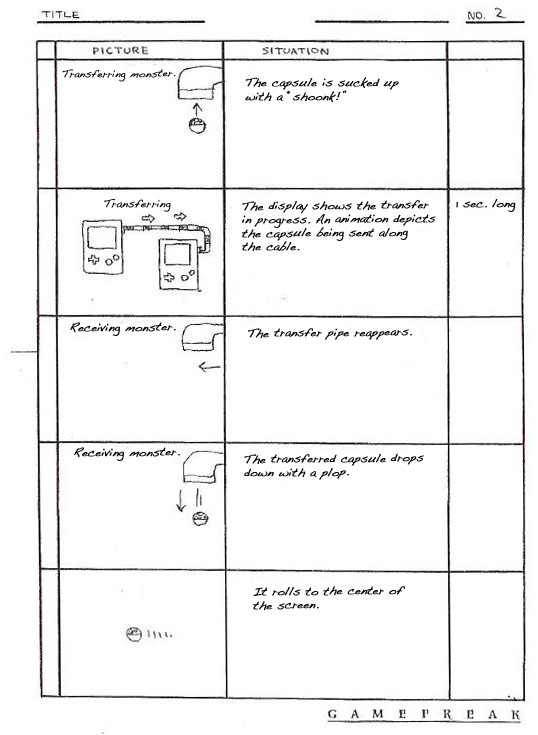
Pokémon trades using the Link Cable were the main reason that Pokémon became such an explosive hit. These early storyboards show the trade screen, including a unique intake pipe.
使用连接线进行的宝可梦交换,是宝可梦得以爆发式走红的主要原因。这些早期分镜展示了交换画面,其中包括一个独特的吸入管道。
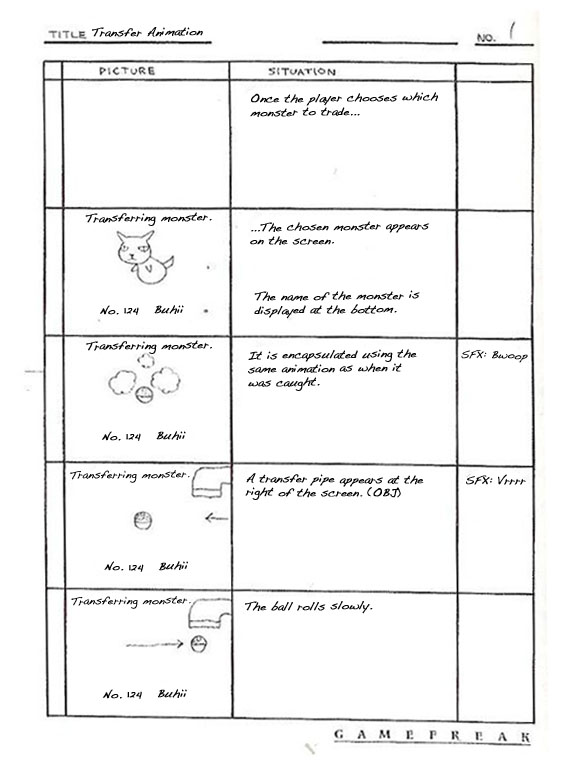
Link Transfer Animation Storyboard (2)
连接传输动画分镜(2)
By examining this illustration of a trade taking place on the Game Boy, one can see the importance the developers put on aspects such as ease of comprehension, as well as how the process of trading would be conveyed on-screen.
通过观察这幅在Game Boy上进行交换的插图,可以看出开发者对易于理解等方面的重视,以及交换过程将如何在屏幕上呈现。
Link Transfer Animation Storyboard (3)
连接传输动画分镜(3)
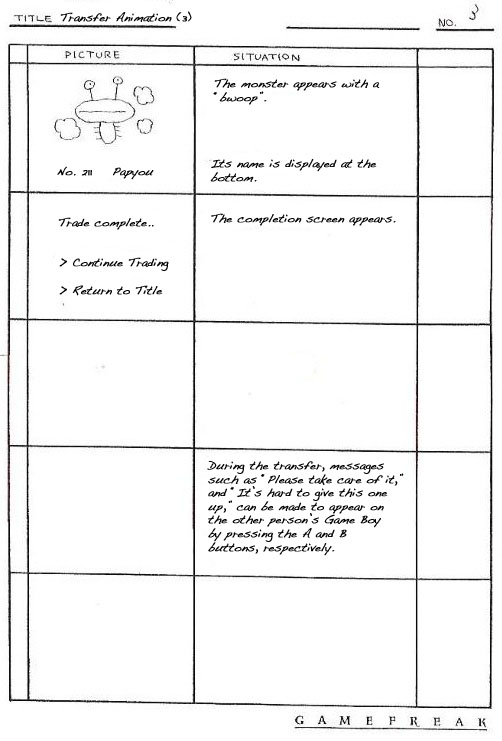
A document illustrating the concept of sending messages to your trade partner, as well as ways in which the developers would encourage players to see Pokémon as living beings, rather than simply data.
一份说明向交换对象发送消息这一概念的文件,同时也展示了开发者如何鼓励玩家将宝可梦视为活生生的生物,而非单纯的数据。
译者注
As you can see, these storyboards feature a few differences from the final trading sequence, such as the Pokéball rolling towards the intake pipe, and the ability to manually send messages to the trainer on the receiving end of the trade.
如你所见,这些分镜与最终的交换流程有几处不同,例如精灵球会滚向吸入管道,以及能够手动向接收交换的训练家发送消息。
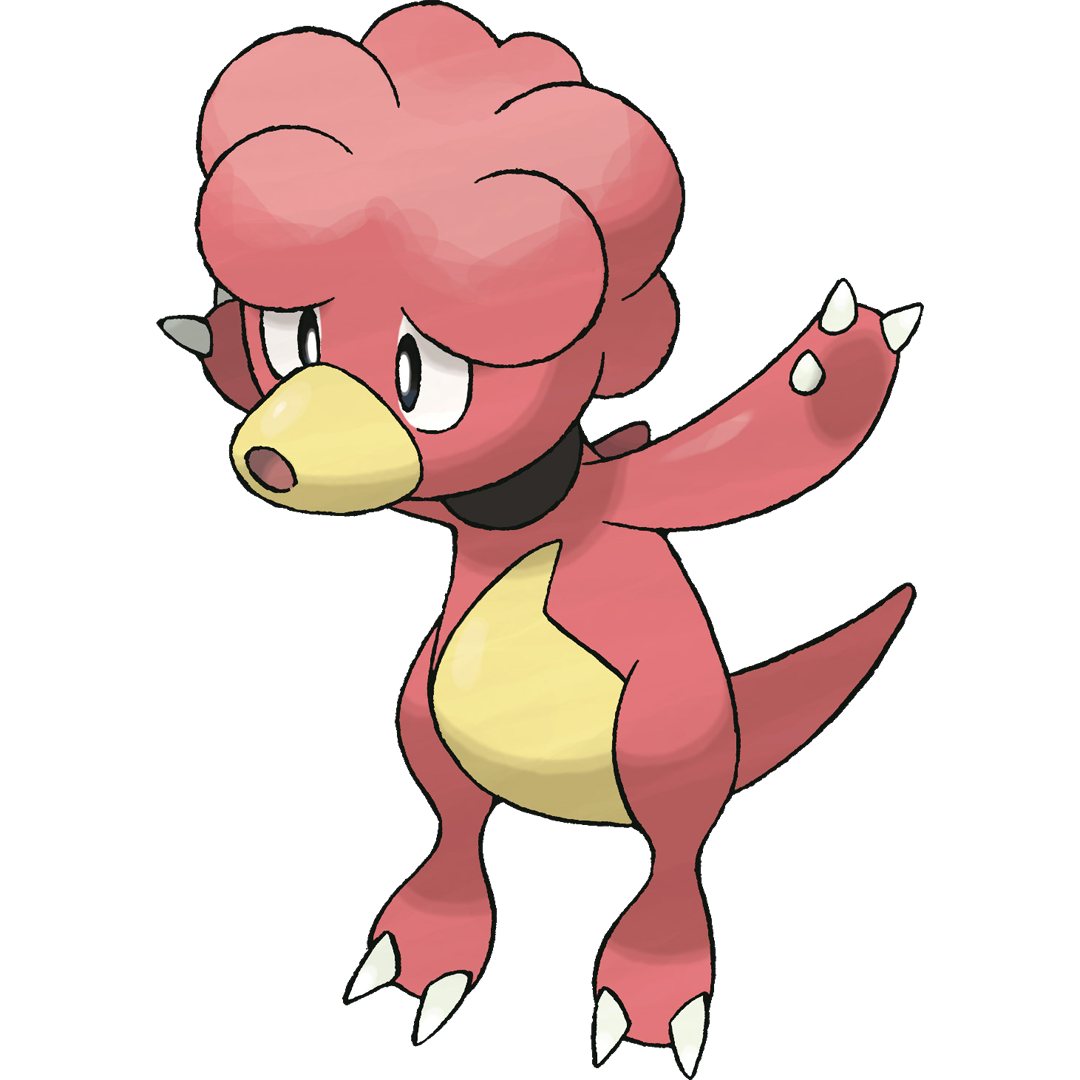
Due to the simplicity of their illustrations, and the fact that no Pokémon share many similarities in name or appearance to Papyou and Buhii, one can hypothesize that they were just joke Pokémon meant for illustrative purposes. The one exception is Magby, which is called Bubii in Japanese.
由于插图简单,且没有宝可梦在名称或外观上与Papyou和Buhii有诸多相似之处,可以推测它们只是用于说明的玩笑宝可梦。唯一的例外是Magby,其在日语中被称为Bubii。
在宝可梦酒店
译者注
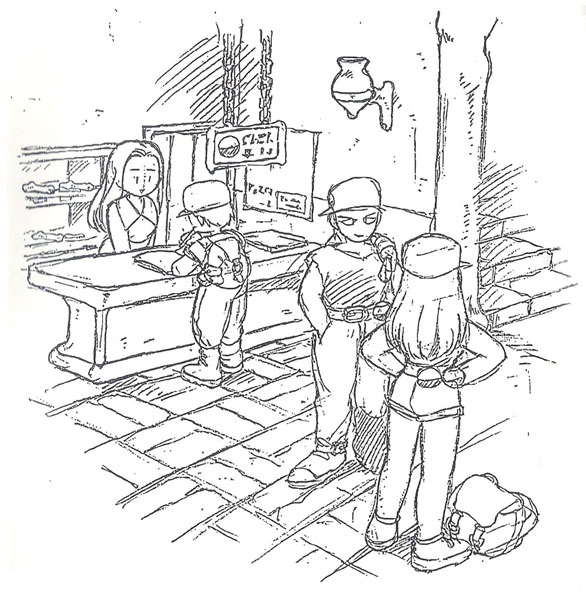
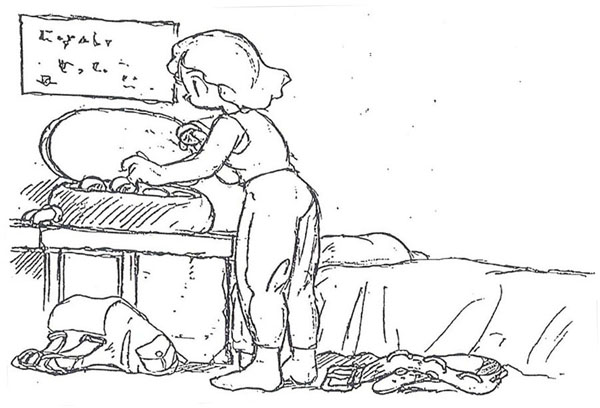
Pokémon Centers may have originally been conceptualized as hotels. This is supported by the fact that that, in the anime, the centers provide lodging for Pokémon trainers.
宝可梦中心最初可能被构思为旅馆。这一点可由动画中宝可梦中心为宝可梦训练家提供住宿这一事实佐证。
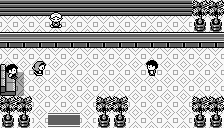
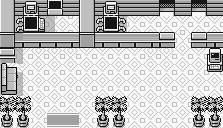
The lone hotel in RGB is located in Celadon City. It shares the same tileset as the game’s Pokémon Centers, including the counter, floor tiles, palm trees, and couch.
在《宝可梦 红·绿》中,唯一的旅馆位于彩虹市。它与游戏中的宝可梦中心使用同一套图块,包括柜台、地板砖、棕榈树和沙发。
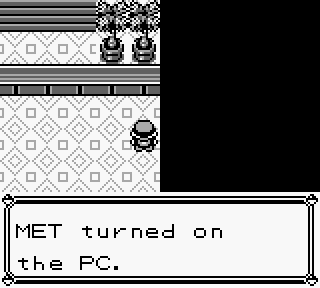
The Celadon Hotel and the player’s house are also the only buildings in the game, aside from Pokémon Centers, to have PCs. (However, the player’s PC can only be used to store items.) If you don’t remember the PC in the hotel, that’s because it’s invisible. It sits at the far right of the lobby, in the same position you would expect to find it in a Pokémon Center. Players can access the PC by pressing A while standing in the position shown in the screenshot above. It was later removed in Pokémon Yellow.
彩虹市旅馆和玩家家中也是游戏中除宝可梦中心外仅有的拥有电脑的建筑。(不过,玩家的电脑只能用来存放物品。)如果你不记得旅馆里的电脑,那是因为它是隐形的。它位于大堂最右侧,就在宝可梦中心里你会预期找到它的同一位置。玩家站在上图所示位置按下A键即可访问电脑。该电脑后来在《宝可梦 皮卡丘》中被移除。
捕捉宝可梦
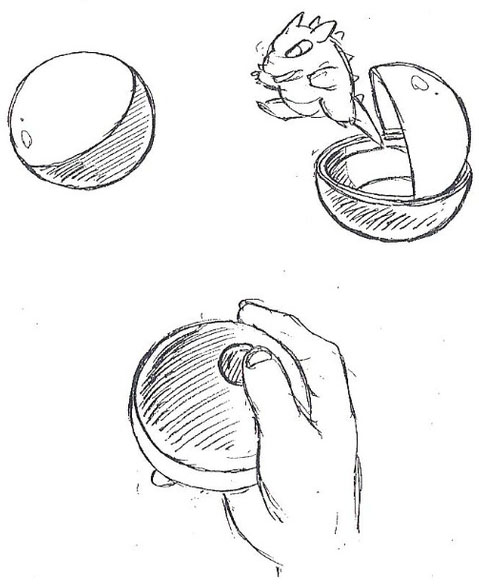
The capsule is opened and closed by a button on the back.
胶囊通过背面的按钮打开和关闭。
Twist the capsule to lock it.
扭转胶囊将其锁住。
Monster Capsule™
怪物胶囊™
Portable Monster Capsule
便携式怪物胶囊
PCM-55R
PCM-55R
$198.00
$198.00
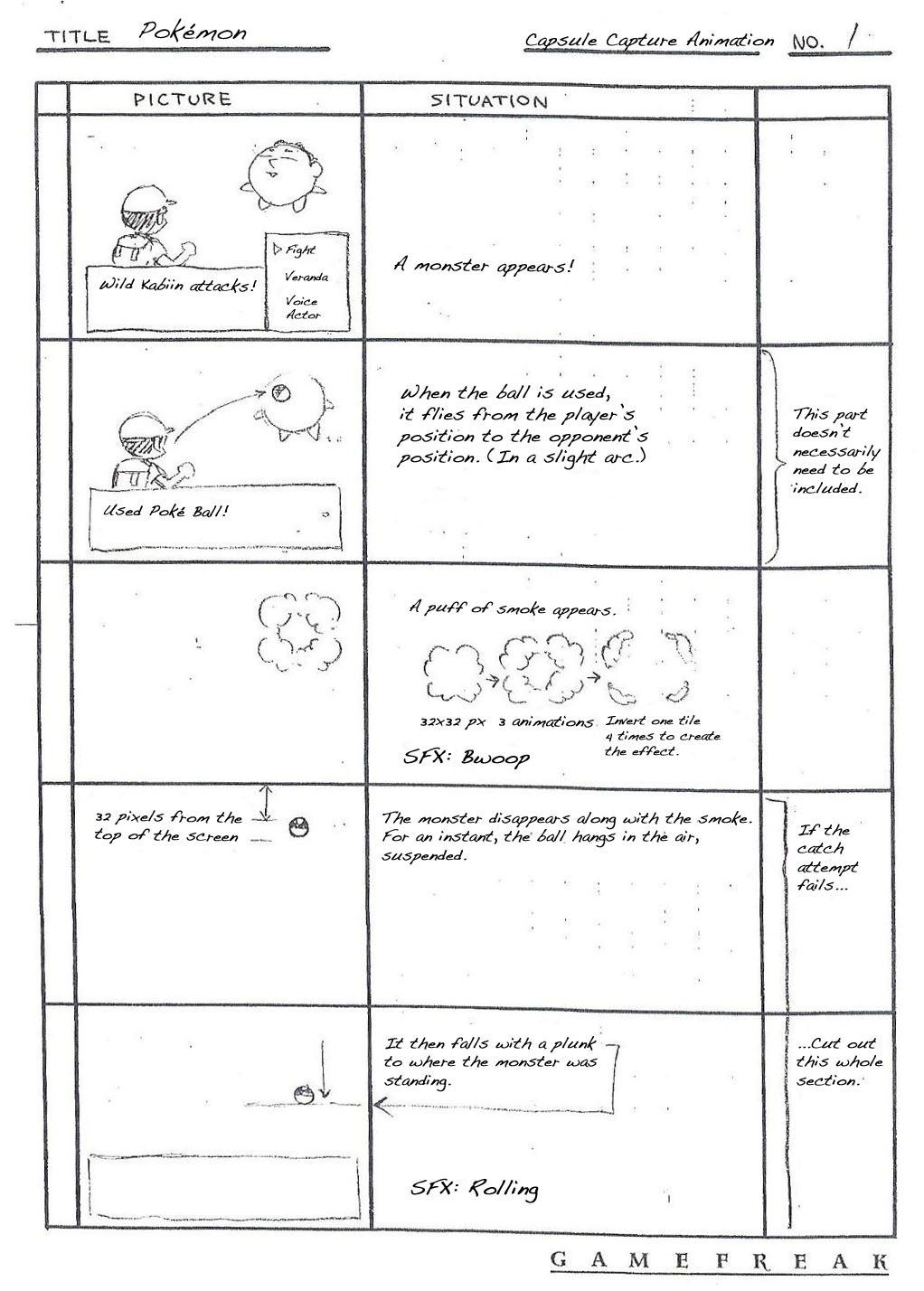
Capsule Capture Animation Storyboard (1)
胶囊捕获动画分镜(1)
A storyboard depicting the sequence of animations covering a Pokémon encounter, using a Pokéball, and capturing a Pokémon. The illustration goes into detail about how Pokémon are caught using Pokéballs.
一份分镜图,描绘了遭遇宝可梦、使用精灵球以及捕获宝可梦的一系列动画。插图详细说明了如何使用精灵球捕捉宝可梦。
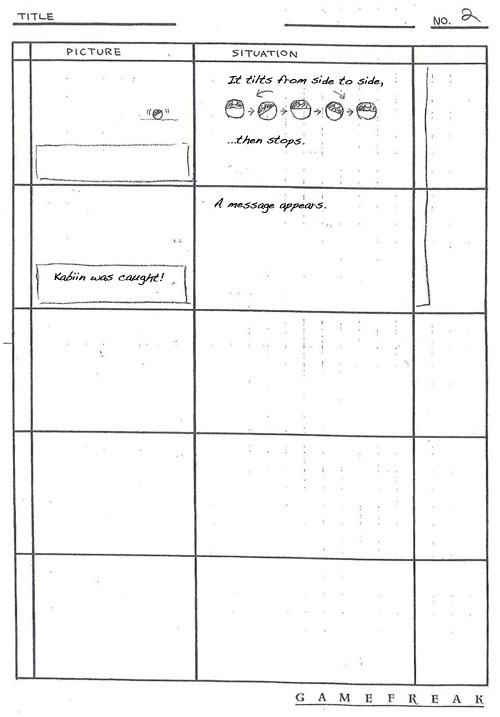
Capsule Capture Animation Storyboard (2)
胶囊捕获动画分镜(2)
This document really expresses the effort put into the Pokémon capture animations, including how the Pokéball tips over when you catch one, as well as the variations in the animation when the capture fails.
这份文档真切地展现了在宝可梦捕获动画上投入的心血,包括捕获成功时精灵球如何倾倒,以及捕获失败时动画的各种变化。
译者注
Yes, that really does say $198.00 for a Pokéball.
没错,上面确实写着精灵球售价198.00美元。
In the English Pokémon games, prices are listed with in front of the number, indicating Pokédollars. In the Japanese versions, prices are listed with 円 in front of the number, indicating yen. 1 yen or Pokédollar is equivalent to about 1 cent in American currency. An easy way to convert yen and/or Pokédollars to American money is to move the decimal two places to the left. Therefore, a 500.00 Pokéball costs about $5.00 American.
在英文版宝可梦游戏中,价格数字前带有符号,表示宝可梦美元。在日文版中,价格数字前带有“円”,表示日元。1日元或1宝可梦美元约等于1美分。将日元和/或宝可梦美元换算成美元的一个简便方法是将小数点向左移两位。因此,一个售价500.00的精灵球约合5.00美元。

Kabiin’s name is reminiscent of Snorlax’s Japanese name, Kabigon. They say that Kabigon is modeled on a Pokémon developer named Koji Nishino, who appears in the picture above. It seems like Snorlax’s Japanese name stems from the fact that it will eat anything, including things with mold (黴 “kabi”) growing on them. Thus, it may be that this joke Pokémon is a caricature of Nishino as well. What its battle commands mean, however, I haven’t the faintest idea.
Kabiin的名字让人联想到卡比兽的日文名Kabigon。据说Kabigon是以一位名叫西野浩二的宝可梦开发者为原型,他出现在上面的图片中。卡比兽的日文名似乎源于它会吃任何东西,包括长霉(黴“kabi”)的东西。因此,这个玩笑宝可梦可能也是对西野的讽刺画。不过,它的战斗指令是什么意思,我完全不知道。
As you can see from the storyboards, the animations and sound-effects here are pretty much identical to those of the released game.
从分镜图可以看出,这里的动画和音效与发售版游戏几乎完全相同。
在宝可梦商店
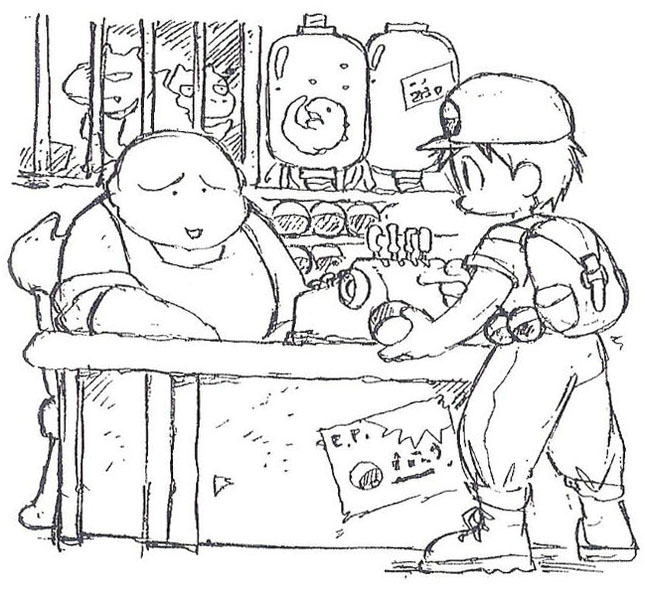
“Hey, Mister, I’ll take this one, please.”
“喂,大叔,我要这只,拜托了。”
“Lapras… I dunno if you’re tough enough to handle it yet, kid…”
“拉普拉斯……我不知道你够不够强,能不能驾驭它啊,小鬼……”
译者注
This picture may indicate that the concept of players having to attain more power before being able to control certain Pokémon was already in place in the early stages of development. This is reminiscent of Ash’s Charizard in the anime, and the
这张图可能表明,玩家必须先获得更强的实力才能操控某些宝可梦这一概念,在开发的早期阶段就已经存在了。这让人想起动画中小智的喷火龙,以及
obedience effect of badges in the games.
游戏中徽章的服从效果。

The idea of buying and selling Pokémon was never really fleshed out in Generation 1. The only way to “buy” Pokémon is to trade your game tokens for them at the Celadon City Game Corner’s prize exchange. The con man on the route to Mount Moon also offers to sell the player a Magikarp for 500. (Remember, that’s about $5 in American currency.)
买卖宝可梦的想法在第一世代中从未真正得到充实。唯一“购买”宝可梦的方式,是在彩虹市的游戏城奖品兑换处用游戏代币换取。通往月见山路上那个骗子也提出以500元卖给玩家一只鲤鱼王。(记住,这大约相当于5美元。)
状态画面
译者注
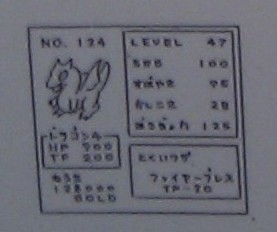
There is evidence that money was intended to be a more prominent game mechanic, however. The status screen concept art above displays the monetary value of the Pokémon in question. Tajiri also had this to say about the role of money in the games:
然而,有证据表明金钱原本被设计为一种更重要的游戏机制。上面的状态画面概念图显示了所涉宝可梦的金钱价值。田尻智也曾就金钱在游戏中的作用说过这样的话:
田尻智
I was thinking about allowing players to trade Pokémon with money attached, but I gave the idea up in RGB as it doesn’t do anything to increase your understanding of the games.
我曾考虑允许玩家在交易宝可梦时附带金钱,但在红·绿中我放弃了这个想法,因为它无助于加深你对游戏的理解。
This status screen differs from the final game in other ways as well. Instead of a Special stat, the Pokémon has Intelligence. Fire Breath, the only attack listed uses something called TP, which undoubtedly stands for Technical Points.
这个状态画面在其他方面也与最终游戏不同。宝可梦没有特殊能力值,而是有智力。唯一列出的攻击火焰吐息使用了一种叫做TP的东西,这无疑代表技术点数。
In Pokémon RGB, each move has a certain number of Power Points (PP) allotted to it. Run out of these, and the move becomes unusable. While PP are tied to individual attacks, TP seem to have been tied to individual Pokémon: a bank of points that could be drawn from. It is unclear whether Dragonchi would have had a list of basic actions, such as Attack and Defend, that it could use in addition to its stat-draining special attack, and whether or not these would have also used up TP.
在宝可梦 红·绿中,每个招式都有一定数量的力量点数(PP)。用完这些点数,招式就无法使用。PP与个别攻击绑定,而TP似乎与个别宝可梦绑定:一个可以抽取的点数库。目前不清楚龙奇是否会有诸如攻击和防御之类的基本行动列表,可以在其属性吸取的特殊攻击之外使用,以及这些行动是否也会消耗TP。
战斗画面
译者注
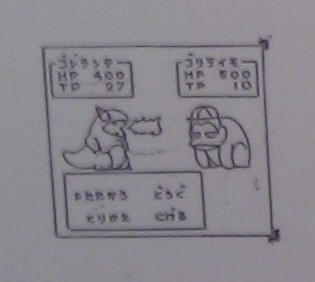
Another screen which features Technical Points. One staple of Pokémon that’s lacking is the HP bars. Apparently there was some deliberation during development over how health should be displayed.
另一个以技术点数为特色的画面。缺少了宝可梦的一个主要元素:HP条。显然,在开发过程中曾有过关于如何显示生命值的讨论。
增田顺一
Game Freak’s modus operandi is that we add ideas and break things down. For example, at one point we took out the health gauge during battles and tried using phrases like “That hurt,” and “That really hurt,” instead. That didn’t turn out to be very interesting, though, and we went back to using the meters.
Game Freak的工作方式是,我们添加想法并分解它们。例如,我们曾一度在战斗中移除生命值槽,并尝试使用“好痛”和“真的好痛”之类的短语。不过,那结果并不十分有趣,于是我们又重新使用了计量槽。
Goriraimo may well be a reference to APE Inc., which was a company run by Shigesato Itoi’s until 1995, when it turned into Creatures Inc.. The latter shares ownership of the copyright to the Pokémon franchise with Nintendo and Game Freak.
Goriraimo很可能是指APE Inc.,这是一家由糸井重里经营的公司,直到1995年转变为Creatures Inc.。后者与任天堂和Game Freak共同拥有宝可梦系列的版权。
开场动画
开场分镜
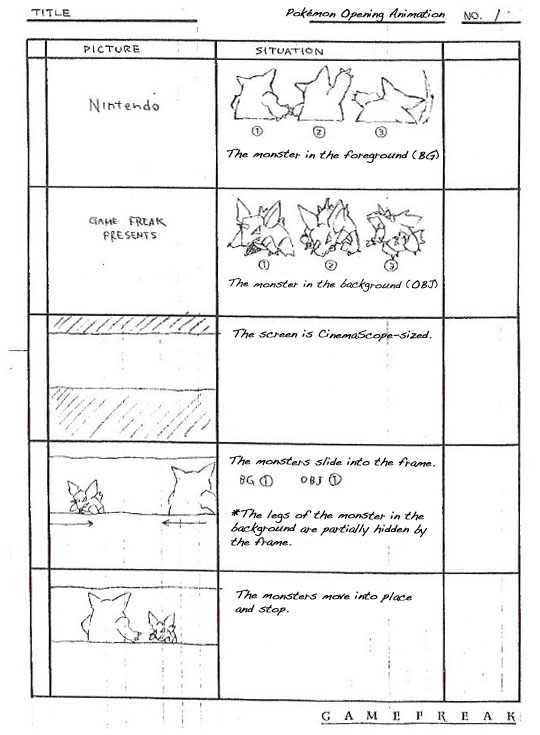
These are taken from the Pokémon Red & Green opening animation storyboards. The scene, which depicts a Pokémon facing away from the player and a Pokémon staring down at the player, is another example of the developers putting the “persuasive atmosphere” mentioned by Tajiri into play. The openings of Pokémon Fire Red & Leaf Green, remakes of the original games, are based off this scene.
这些取自宝可梦 红·绿的开场动画分镜。这个场景描绘了一只宝可梦背对玩家,以及一只宝可梦俯视玩家,是开发者运用田尻智提到的“有说服力的氛围”的另一个例子。原版游戏的重制版宝可梦 火红·叶绿的开场就是基于这个场景。
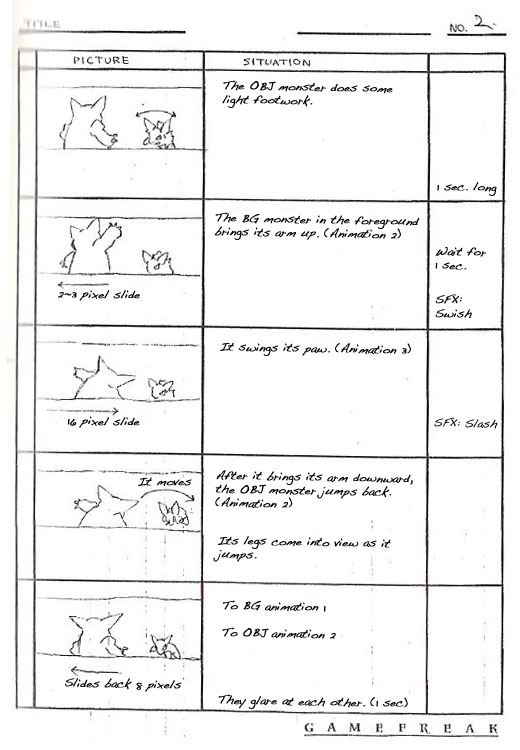
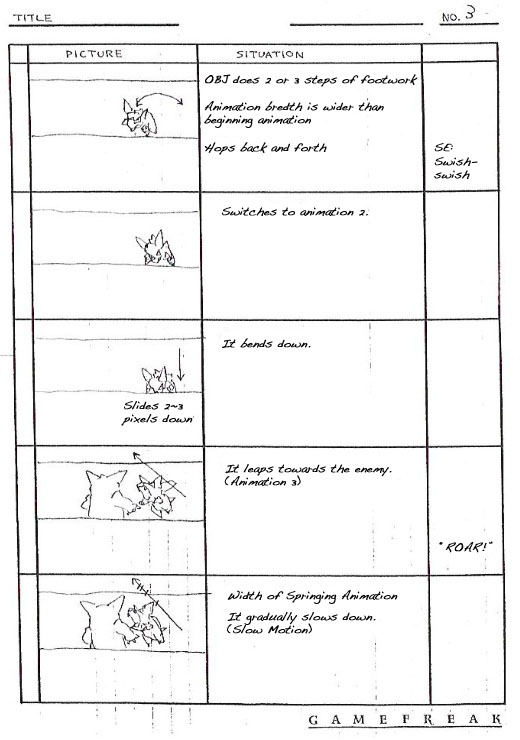
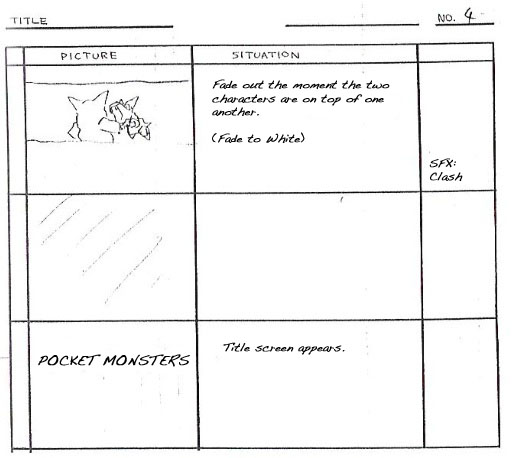
译者注
As you can see, these storyboards are identical to the version of the opening which appears in the games. Apparently the developers put a lot of effort into making sure the scene was exactly as they imagined it.
如你所见,这些分镜与游戏中出现的开场画面完全一致。看来开发者为了确保场景与他们想象中的一模一样,付出了很多努力。
杉森建
We had at least 10 different scenarios just for the opening sequence.
仅开场动画我们就准备了至少10种不同的方案。
As the caption mentions, Pokémon Fire Red & Leaf Green have an updated version of this scene, as seen in the video above.
正如说明文字所提到的,《宝可梦 火红·叶绿》中有这个场景的更新版本,如上方视频所示。
大地图
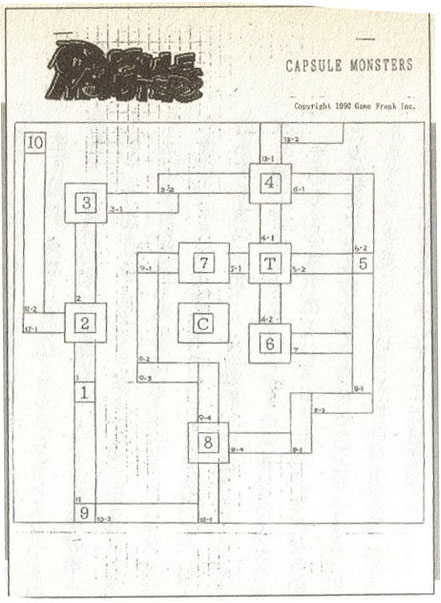
译者注
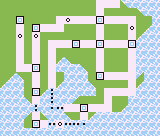
It seems that the Pokémon overworld was pretty set in stone, even at this early stage of development. Though the routes use a different numbering system than we’re used to, their order is identical to that of the final game. The only unexplainable location is C, which isn’t connected to anything and doesn’t represent any town we know of. Its identity might be linked to the extra town location data that remains in the ROM.
看来即使在开发的早期阶段,宝可梦的大地图就已经基本定型了。虽然道路使用的编号系统与我们熟悉的有所不同,但它们的顺序与最终游戏完全一致。唯一无法解释的地点是C,它没有与任何地方相连,也不代表我们所知的任何城镇。它的身份可能与ROM中残留的额外城镇位置数据有关。
精灵图
The following pictures were gathered from Gamefreak’s official website in Dec. 1997. The authors of our magazine jumped to conclusions, exclaiming “Could these be some of the new creatures appearing in Pokémon 2 [Pokémon Gold & Silver]?!” (Sorry about that!)
以下图片收集自Game Freak于1997年12月的官方网站。我们杂志的作者们草率地下结论,惊呼“这些会不会是《宝可梦2》[《宝可梦 金·银》]中登场的新生物?!”(对此我们深表歉意!)
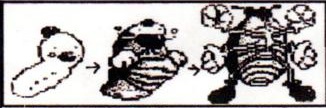
From left to right, we see Kokaana, Kasanagii, and a Pokémon whose name is unknown.
从左到右,我们看到的是Kokaana、Kasanagii,以及一只名字未知的宝可梦。
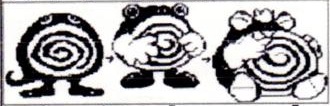
From left to right, we see Poliwag, Nyoroppi, and Nyousuka.
从左到右,我们看到的是蚊香蝌蚪、ニョロッピ和ニョウスカ。
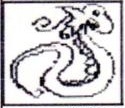
An evolution of Dragonair?!
哈克龙的进化?!
The Pokémon that appear in the pictures are actually Weedle, Poliwag, and Dragonair. It seems that these characters once looked very different from how they appear in the final game. So, why was their design changed…? According to Atsuko Nishida, a designer:
图片中出现的宝可梦实际上是独角虫、蚊香蝌蚪和哈克龙。看来这些角色曾经的样子与最终游戏中的形象大不相同。那么,为什么它们的设计被改变了呢……?据设计师西田敦子说:
“We wanted to give Weedle a cool final evolution, so we went with Beedrill as it appears today. Poliwag’s final evolution, Poliwrath, as it appears in Picture 2, doesn’t look very tough. Players wouldn’t have been happy if they’d gone to all the trouble of evolving Poliwag only for it to look weak.
“我们想给独角虫一个酷炫的最终进化,所以采用了今天看到的大针蜂。蚊香蝌蚪的最终进化,如图2所示的蚊香泳士,看起来不太强壮。如果玩家辛辛苦苦进化了蚊香蝌蚪,结果它看起来很弱,他们会不高兴的。
Dragonair didn’t undergo many changes, but its final design is cool because it’s more refined and stylish. It must have been the designers’ deep affection towards Pokémon, as well their discerning nature when it came to the details of each creature, that allowed them to create such charming and awesome characters!
哈克龙没有经历太多变化,但它的最终设计很酷,因为它更加精致和时尚。一定是设计师们对宝可梦的深厚感情,以及他们对每个生物细节的挑剔本性,才让他们创造出如此迷人和了不起的角色!
译者注
Weedle, Kakuna, Beedrill
独角虫、铁壳蛹、大针蜂
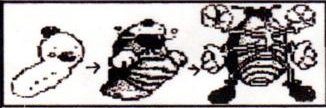

As you can see from these images, the Weedle evolutionary line went through quite a few changes in both name and appearance. Though Weedle is introduced in this picture as Kokaana, its final Japanese name is Biidoru. Kakuna is introduced as Kasanagii, but its final Japanese name is Kokuun. (蛹 “sanagi” means cocoon in English.)
从这些图片可以看出,独角虫的进化线在名称和外观上都经历了不少变化。虽然在这张图片中独角虫被介绍为Kokaana,但它的最终日文名是Biidoru。铁壳蛹被介绍为Kasanagii,但它的最终日文名是Kokuun。(蛹“sanagi”在英语中是茧的意思。)
Poliwag, Poliwhirl, Poliwrath
蚊香蝌蚪、蚊香君、蚊香泳士
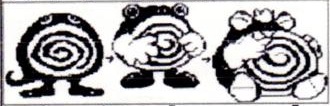

Likewise, Poliwhirl is introduced as Nyoroppi, but its final Japanese name is Nyorozo. Poliwrath is introduced as Nyosuka, even though its final Japanese name is Nyorobon. The appearance of Poliwag’s evolutionary line did not change as much as Weedle’s. However, Poliwrath’s final design does not feature a crown. Interestingly enough, using the King’s Rock item on Poliwhirl will cause it to evolve into Polytoed, one of Poliwag’s two final forms. King’s Rock looks like this:
同样,蚊香君被介绍为Nyoroppi,但它的最终日文名是Nyorozo。蚊香泳士被介绍为Nyosuka,尽管它的最终日文名是Nyorobon。蚊香蝌蚪的进化线外观变化没有独角虫那么大。然而,蚊香泳士的最终设计没有王冠。有趣的是,对蚊香君使用国王宝可梦道具会使其进化为Polytoed,这是蚊香蝌蚪的两种最终形态之一。国王宝可梦看起来像这样:
Dratini, Dragonair, Dragonite
迷你龙、哈克龙、快龙
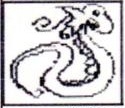
In this picture, Dragonair lacks the blue baubles on its tail. Instead, it has two antenna-like streamers attached to its head, and a scaly ridge down its back. While we lack early images for Dratini and Dragonite, we have evidence to presume that this ridge was a feature of Dratini’s evolutionary line. Namely, the fact that it is preserved in the sprite art. This is what Dragonite’s front sprite looks like in Pokémon Green the Japanese version of Red:
在这张图中,哈克龙的尾巴上没有蓝色的圆球。取而代之的是,它的头上附有两条类似触角的飘带,背部有一道鳞状脊。虽然我们缺少迷你龙和快龙的早期图像,但有证据可以推测这道脊是迷你龙进化线的特征。也就是说,它在精灵图中被保留了下来。这是快龙在日本版《红》的《绿》中的正面精灵图的样子:

Its front sprite was redesigned to omit the crest in Japanese Blue as well as English Red & Blue, which are based on it:
它的正面精灵图在日本版《蓝》以及基于其制作的英文版《红·蓝》中被重新设计,去掉了冠饰:

However, the developers neglected to change its back sprite. This sprite is used in Japanese Red, Green, and Blue, as well as English Red & Blue:
然而,开发者忘记更改它的背面精灵图。这张精灵图被用于日本版《红》、《绿》、《蓝》以及英文版《红·蓝》:

In Gold & Silver, this oversight was amended and the ridge was removed entirely:
在《金·银》中,这一疏忽得到了修正,脊被完全移除:

I suppose they wanted to make sure things were consistent. These two aren’t the only ones whose designs have gone through some changes. The sprites of Pokémon such as Vaporeon, Charmeleon, and Arbok have also been altered over time.
我想他们是想确保一致性。这两只并不是唯一设计经历过变化的宝可梦。水伊布、火恐龙和阿柏怪的精灵图也随着时间的推移被修改过。
简要结论
译者注
And that brings our retrospective to a close. These might not be the only images related to Pokémon in the book they’re extracted from. If anyone has a copy of Satoshi Tajiri: The Man who Created Pokémon (ISBN: 4840127751), perhaps they might be willing to share more pictures and text, now that they can be deciphered.
我们的回顾到此结束。这些可能不是从书中提取的唯一与宝可梦相关的图像。如果有人拥有《田尻智:创造宝可梦的男人》(ISBN: 4840127751)一书,既然现在可以解读了,或许他们愿意分享更多的图片和文字。
This image, unfortunately, remains unreadable because of its low resolution. Anyone with further information or resources regarding early Pokémon is encouraged to get in touch with me at glitterberri.com@gmail.com, or Nat at Fuck Yeah, Beta Pokémon Art.
遗憾的是,这张图像由于分辨率低而无法辨认。任何有关于早期宝可梦的进一步信息或资源的人,欢迎通过 glitterberri.com@gmail.com 联系我,或通过 Fuck Yeah, Beta Pokémon Art 联系 Nat。
Special Thanks:
特别感谢:
Keitaro (Blue Reflections)
Keitaro(Blue Reflections)
Nat (Fuck Yeah, Beta Pokémon Art)
Nat(Fuck Yeah, Beta Pokémon Art)
Members (Pokémon Disassembly Project)
成员(宝可梦反汇编项目)
Contributors (Bulbapedia)
贡献者(Bulbapedia)
Without the input, assistance, and resources provided by those listed above, this article would not have been possible.
如果没有以上列出的各位提供的意见、协助和资源,这篇文章将无法完成。
Check out the these links for more great trivia and features!
查看这些链接以获取更多精彩的冷知识和专题文章!
(Did you know that Pokémon Gold was originally going to have a skateboard?)
(你知道吗?《宝可梦 金》原本计划加入滑板。)
Conversely, follow me on Tumblr, Facebook, or Twitter for more stuff like this!
反过来,也请在Tumblr、Facebook或Twitter上关注我,获取更多类似内容!