动画作曲家宫崎慎二 × GAME FREAK声音团队圆桌座谈:宝可梦交响改编、游戏原声与旋律之魂
原始资料
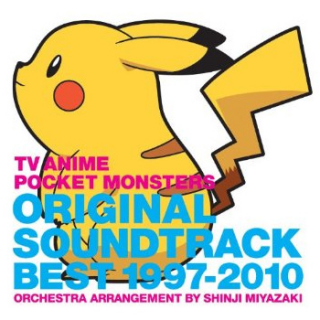
《TV动画 宝可梦 原声音乐精选集 1997-2010》CD盒装封面:收录了无印篇至钻石与珍珠十余年来由宫崎慎二执棒编曲的经典交响原声。
图像作为阅读入口保留;正文仍以可检索、可对照的文字档案为主。
逐段译读
序言:宫崎慎二 × GAME FREAK 声音团队“漫谈宝可梦音乐”
Introduction: Shinji Miyazaki × Game Freak Sound Team “Talk about Pokémon Music”
原文
The following interview was translated from the booklet included with the TV Anime Pocket Monsters Original Soundtrack Best 1997-2010 (TVアニメ ポケットモンスター オリジナルサウンドトラック ベスト 1997-2010) CD box set released on September 8th, 2010. Participants: Shinji Miyazaki (Anime Composer/Arranger), Junichi Masuda (Director of game series), Go Ichinose (Sound Leader of game series), Hitomi Sato (Sound Staff Member).
译文
以下访谈翻译自2010年9月8日发行的《电视动画 宝可梦 原声音乐精选集 1997-2010》(TVアニメ ポケットモンスター オリジナルサウンドトラック ベスト 1997-2010)CD套装附带小册子。出席者:宫崎慎二(动画作曲家/编曲家)、增田顺一(游戏系列总监)、一之濑刚(游戏系列音乐总监)、佐藤仁美(游戏系列声音团队成员)。
《TV动画 宝可梦 原声音乐精选集 1997-2010》CD盒装封面:收录了无印篇至钻石与珍珠十余年来由宫崎慎二执棒编曲的经典交响原声。
第1章:创作者的音乐原点——从武满彻、古典管弦到摇滚与合成器
Chapter 1: The Musical Roots of the Creators — Classical, Rock, and Synthesis
原文
First, may I inquire about your musical roots, Shinji Miyazaki-san?
译文
首先,能否请宫崎慎二先生谈谈您的音乐根源?
原文
Thinking back, I’ve trivially listened to music since I was small. There was a slightly rich boy in our neighborhood (laughs) and he had a shortwave radio at home. And whenever I visited the boy at home, we would listen to the Billboard music of that time. I remember listening to The Spotnicks and many other things.
译文
回想起来,我从小便不经意地听着音乐。我们街区有个家境稍显富裕的男孩(笑),他家有一台短波收音机。每次去他家玩,我们就会一起听当时的公告牌音乐。我记得听过The Spotnicks乐队的曲子,还有许多其他作品。
原文
So you mostly listened to Western music?
译文
所以您主要听的是西洋音乐吗?
原文
No, I also listened to Kazuo Funaki-san and Sylvie Vartan’s “Search for the Idol” (Cherchez l’idole) and other things.
译文
不,我也听了船木一夫先生和西尔维·瓦尔坦的《寻找偶像》(Cherchez l’idole)等作品。
原文
And what made you want to become a professional?
译文
那么,是什么促使您立志成为职业作曲家的呢?
原文
I liked music, but I hadn’t received any specialized education on it, so I tried to attend a normal university. However, I couldn’t give up on music, so I worried myself, wondering if there were any connections. Shortly before that, I just happened to listen to Toru Takemitsu-san’s music and was incredibly moved. I also read Takemitsu-san’s literary work and thought, “This person is amazing.” That’s when I started brooding and went all the way to Tokyo to meet him.
译文
我虽然喜爱音乐,却未曾接受过任何专业教育,于是便打算报考普通大学。然而,终究无法割舍对音乐的执念,我为此苦恼不已,思忖着是否有什么门路可寻。恰在彼时,我偶然聆听了武满彻先生的音乐,深受震撼。又读了武满先生的著作,心想“此人真是了不起”。于是我开始郁郁思索,一路奔赴东京去见他。
原文
What, all of a sudden (laughs)?
译文
怎么突然这么问?(笑)
原文
Yes (laughs). I visited a reporter who had written an article on Takemitsu-san in the newspaper and told him that I’d like to meet him. But I was told that he was not in Japan but in Paris at the moment, attending a music festival or something. There was nothing to be done about it, so I thought, “What now? Should I go home?” and was just lazing around at Yotsuya station, when this poster from a music academy caught my eye. Not to mention, it said, “basic course”. I wondered, “What do you do in a basic course? Could it be something I could do as well?” And so I ordered an application form and… All in all, I listened to different kinds of music and just dimly thought, “It would be nice to enter a world like this”, but it wasn’t until I was twenty that I approached it concretely.
译文
是的(笑)。我曾拜访过一位在报纸上撰写武满彻先生相关文章的记者,告诉他我想与武满先生见一面。却被告知他此刻不在日本,而是在巴黎参加某个音乐节之类的活动。事已至此,我心想“这下该怎么办?要打道回府吗?”,正百无聊赖地待在四谷站时,一张音乐学院的海报映入了我的眼帘。而且上面还写着“基础课程”。我寻思着“基础课程到底是做什么的?莫非我也能学得来?”于是便索要了报名资料……总而言之,我听了各种各样的音乐,只是朦胧地想着“若能踏入这样的世界该多好”,但真正具体地付诸行动,已经是二十岁时候的事了。
第2章:GAME FREAK 的根基——电影原声、吹奏乐部与8位元点阵之魂
Chapter 2: Game Freak's Origins — Soundtracks, Brass Bands, and Chiptunes
原文
Where do the musical roots of the Pokémon sound team lie?
译文
宝可梦声音团队的音乐根基源自何处?
原文
I was in third or fourth grade in elementary school. We had the soundtracks of “The Bridge on the River Kwai” and “Ben Hur” at home and I remember listening to them and trying to emulate them with my recorder. I feel like that was the first moment in which I thought, “Music is interesting!” Other than that, there was the YMO (Yellow Magic Orchestra) I listened to when I was in fifth or sixth grade. From then on, I became more of a techno type. Tangerine Dream, Ultravox, Kraftwerk and such. My parents bought me a radio-cassette player, but I only listened to rock and Western music. That’s why there was almost no one in school I could relate to (laughs). Not to mention, records were expensive so you couldn’t buy them so easily.
译文
我那时正读小学三、四年级。家里有《桂河大桥》和《宾虚》的原声唱片,我记得自己听着它们,试着用竖笛去模仿。我觉得那是我第一次感到“音乐真有趣!”除此之外,还有五、六年级时听的YMO(Yellow Magic Orchestra)。从那以后,我变得更偏向电子乐一派。Tangerine Dream、Ultravox、Kraftwerk之类的。父母给我买了收录机,但我只听摇滚和西方音乐。所以学校里几乎没人能和我聊到一块去(笑)。更何况唱片很贵,也不是那么容易就能买得起的。
原文
So that’s when the radio airchecks came in, right (laughs)?
译文
于是电台播出的录音就派上用场了,对吧(笑)?
原文
Yes. But even when a song was played, I didn’t know who sang it and what is was called. That’s why I bought magazines and read them to get information. That’s how it was back then.
译文
是的。但即便有歌曲播放,我也既不知道演唱者是谁,也不知道曲名为何。正因如此,我才去买杂志翻阅,从中获取信息。当时就是这样的时代。
原文
For you, Masuda-san, what era constitutes the base of your music works today?
译文
对增田先生而言,您如今音乐创作的根基,主要建立在哪个时代的作品之上呢?
原文
It was when I entered junior high school, I think. I had pestered my parents into buying a synthesizer called MS-10 for me. And since there was someone at school who liked those things as well, we used our two cassette decks to do multiple recordings together (laughs). So I never actually studied music as my specialty.
译文
我想那应该是我升上初中的时候。我缠着父母给我买了一台叫MS-10的合成器。学校里正好也有喜欢这些东西的人,我们就用两台卡带录音机一起做多重录音(笑)。所以我其实并没有把音乐当作专业来正经学过。
原文
Is that so?
译文
是这样吗?
原文
In high school, I was part of a brass band and played the trombone, but I never studied it (laughs). Basically, I like techno and rock. Those are far away from the Pokémon world. That one goes more in the direction of Marilyn Manson and Slipknot.
译文
高中时我曾加入铜管乐队,吹奏长号,但从没正经学过(笑)。基本上,我偏爱电子乐与摇滚。那些跟宝可梦的世界相距甚远。宝可梦的世界更偏向玛丽莲·曼森和活结乐队那个方向。
原文
Masuda-san’s taste in music from back then is reflected in the battle tracks (laughs).
译文
增田先生当时的音乐品味,在战斗曲目中体现得淋漓尽致(笑)。
原文
Where do your musical roots lie then, Ichinose-san?
译文
那么,一之濑先生,你的音乐根基在哪里呢?
原文
When I was in kindergarten, I was forced to attend a swimming school and a music class. As for the swimming school, I kept crying until I didn’t have to attend any more, but I remained in the music class the whole time. It’s just that I never did my homework, so my music teacher told me, “I won’t let you advance to higher classes.” That’s when I switched to the piano. But even then, I didn’t practice unless it was a piece I liked. That went on until junior high school, I think. In terms of piano [music], I liked Chopin the most. I often thought, “I want to play this piece!” and put a lot of effort into practicing a difficult piece. It was also during junior high school that I got into game music. Famicom [Family Computer] music, Game Center music and things like that. I also took recording devices to the Game Center and recorded the sounds, then played them on the piano.
译文
上幼儿园时,我曾被强制送去游泳学校和音乐教室。游泳学校那边,我一直哭闹,直到终于不用再去为止;而音乐教室则一直坚持了下来。只是我从来不做作业,音乐老师便对我说:“我不会让你升入更高年级。”于是我便转而改学钢琴。可即便如此,若不是自己喜欢的曲子,我也还是不练。这种情况大概一直持续到初中吧。就钢琴[曲目]而言,我最喜欢肖邦。我常常想着“我想弹这首曲子!”,然后为练习一首高难度的作品付出很多努力。也是在上初中期间,我开始迷上了游戏音乐。红白机[Family Computer]的音乐、游戏厅的音乐之类的。我还会带着录音设备去游戏厅把声音录下来,然后在钢琴上弹奏。
原文
Hearing your story, it sounds like you became part of Game Freak because you were destined to do so.
译文
听您这么一说,倒像是您命中注定要加入GAME FREAK似的。
原文
But the thing is, at that time, I wasn’t even thinking about making music. I only entered Game Freak because I wanted to acquire some qualifications. I just happened to find they were recruiting people for part-time jobs and said, “Excuse me, please let me study here.” So I studied programming, but I couldn’t seem to make progress and before I knew it, I was making music (laughs). Also, I’ve just remembered something else that lead to my starting with music: Once while we were moving, I discovered a record for prenatal care in our house. Apparently, it was music I used to hear when I was still an unborn child; when I checked the playlist, I realized it was full of pieces that I had selected to play on the piano.
译文
不过,当时我压根没想过要去做音乐。我进GAME FREAK,纯粹是想考个资格证。碰巧看到他们在招兼职,就厚着脸皮说“不好意思,请让我在这里学习”。于是我学了编程,但怎么都学不出名堂,不知不觉间就开始做音乐了(笑)。还有一件事,也是我走上音乐之路的契机:有一次搬家,我在家里翻出一张胎教唱片。那似乎是我还在娘胎里时听的音乐;我一看曲目,发现全是我自己选来用钢琴弹的曲子。
原文
Does that mean you had listened to Chopin?
译文
这是否意味着您曾聆听过肖邦的作品?
原文
Yeah. Chopin and Liszt and such. That’s why I think prenatal care does have an effect (laughs).
译文
是的。肖邦、李斯特那些。所以我觉得胎教确实是有影响的(笑)。
原文
I had a similar experience. Apparently, when I was still 0, my father constantly let me listen to a record that contained yodeling. He told me that one morning, before I had learned to talk, I was suddenly standing on my futon and yodeling (laughs). That’s when my parents began to hope that “this kid may have musical talent” (laughs). I began playing the piano at age 3 and continued all the way until second grade in high school. Also, since I always went to Christian-oriented schools, I was very familiar with hymns. That’s why I listened to little else but hymns and piano music until I was 17 or 18 years old (laughs).
译文
我也有过类似的经历。据说我还在0岁的时候,父亲就不断地让我听一张含有约德尔调的唱片。他告诉我,某天早晨,在我还没学会说话之前,我突然站在被褥上约德尔了起来(笑)。从那时起,父母便开始期望“这孩子或许有音乐天赋”(笑)。我从3岁开始学钢琴,一直学到高中二年级。此外,由于我一直就读于基督教方向的学校,对赞美诗非常熟悉。所以直到17、18岁为止,我几乎只听过赞美诗和钢琴曲(笑)。
原文
How did you end up working for Game Freak?
译文
您是如何进入GAME FREAK工作的呢?
原文
There was a job advertisement stating that Game Freak was looking for planners. I worked as a planner for about 7 or 8 years, but then I happened to hear that someone from the sound staff had quit. I had told them once that I could play the piano and when I was asked if I wanted to give it a try, I said yes.
译文
当时有招聘启事说GAME FREAK在招策划。我做了大约七八年策划,后来碰巧听说声音团队有人辞职了。我以前跟他们提过我会弹钢琴,当他们问我愿不愿意试一试时,我就答应了。
原文
Well, Sato had amazing hearing, you see.
译文
这个嘛,佐藤的听力可是相当了得。
原文
Regarding the fact that neither Ichinose-san nor Sato-san were originally part of the sound team; does Game Freak often make personnel changes among members?
译文
关于一之濑先生与佐藤先生原本并非声音团队成员一事,GAME FREAK 是否经常在成员之间进行人事调整?
原文
No, it’s not personnel changes; it’s more like we approach people who are familiar with music and ask them, “Hey, do you want to try and make a music piece like this?” When we find someone talented, we slowly tell them to “come over here” (laughs). So it’s not like they change sections and become part of the sound team.
译文
不,并非人事变动,更像是我们去接触那些熟悉音乐的人,问他们:“嘿,要不要试着创作一首这样的曲子?”当我们发现有才华的人,就会慢慢地对他说“到这边来吧”(笑)。所以并不是他们换了部门、成为声音团队的一员。
原文
We say, “We’re a bit busy, wanna help us out?” That’s what it feels like.
译文
我们常说:“我们有点忙不过来,要不要来帮把手?”感觉就是这样。
原文
After we let them produce something, we tell them that they’re talented.
译文
在我们让他们创作出一些东西之后,我们会告诉他们,他们很有才华。
第3章:从8位元点阵音效到磅礴交响诗——动画管弦配器的创生秘辛
Chapter 3: Transforming 8-Bit Chiptunes into Grand Orchestral Suites
精选集特制插画:小智、皮卡丘与跨世代传说的辉煌交响旅程。
原文
On this CD, all music pieces from the games that were arranged by an orchestra and used for the TV anime are recorded, though it seems like some pieces are used differently in the anime than in the games.
译文
在这张CD中,收录了所有由管弦乐编曲并用于电视动画的游戏乐曲,不过其中似乎也有一些曲目在动画中的使用方式与游戏里有所不同。
原文
You’re right. For example, Disc 2, Track 9 “Crossing the Ocean”. It’s a track from “Ruby & Sapphire” and originally plays while you move from a certain place to a town with a boat. It’s a lively piece that feels speedy because of the boat motif, but during the game, it’s only played for a very short time. In the anime, that piece was turned into a magnificent and moving tune. I thought, “This is great! How interesting!”
译文
说得没错。比如Disc 2第9首《穿越海洋》。那是《红宝石·蓝宝石》中的曲子,原本是在乘船从某处前往城镇时播放的。因为带有船的意象,是一首轻快而有速度感的乐曲,但在游戏中只播放了很短一段时间。到了动画里,这首曲子被改编成了宏大而动人的旋律。我当时心想:“太棒了!真有意思!”
原文
In the case of the anime, a menu (list of the tracks needed) is written beforehand to fit certain scenes and characters. How are they [music pieces] produced in the case of the games?
译文
就动画而言,会事先根据特定场景与角色写好菜单(所需曲目清单)。那么在游戏这边,乐曲又是如何制作出来的呢?
原文
First we bring the necessary scenes to light and fortify what kind of image we want to give off in them, but as the production of the game continues, instances where we say, “I want a tune like this” occur as well, as it was the case with the aforementioned boat scene. So instead of determining how we imagine everything beforehand, we often let the people in charge of the sound actually play the game and then have them produce the tunes.
译文
首先,我们会把必要的场景梳理出来,并强化我们希望在这些场景中呈现的意象;但随着游戏制作推进,也会出现像刚才提到的乘船场景那样,直接提出“我想要这样的曲子”的情况。因此,并不是一开始就把一切都设想好,而往往是先让负责声音的人实际游玩游戏,再请他们创作乐曲。
原文
Being able to produce while looking at the screen would be the most ideal way, but since scenes are still being produced during the development phase, we work with just our imaginations sometimes.
译文
能够一边看着画面一边进行制作是最理想的,但在开发阶段画面本身仍在制作之中,所以有时只能凭借想象来创作。
原文
If it’s a scene where you walk through a city, we produce thinking how the main character feels. Also, in the game, the timing of the scene changes is entirely up to the player. That’s why they [the tunes] always loop. Even if we think, “At this moment, I’d like to build up excitement” and add figures somewhere, chances are that the player doesn’t switch scenes during that moment. We have dilemmas like this sometimes, but there is something enjoyable about it as well.
译文
若是漫步城中的场景,我们便会去揣摩主角的心境来进行创作。此外,在游戏中,场景切换的时机完全取决于玩家。正因如此,这些曲子始终是循环播放的。即便我们想着“此时此刻,真想烘托起情绪”而在某处加入一些乐句,玩家也未必恰好在那个瞬间切换场景。我们有时会面临这样的两难,但其中亦有乐趣可言。
原文
Miyazaki-san on the other hand, uses those game tunes as bases to extend arrangements to be played by an orchestra for the anime. What are the difficulties you experience?
译文
另一方面,宫崎先生则是以那些游戏乐曲为基础,将其延展改编为可供管弦乐团演奏的动画配乐。请问您在这方面遇到过哪些困难?
原文
During the early days of Pokémon, the number of sounds (that could be played at once) was low.
译文
在宝可梦的早期,能够同时播放的音效数量很少。
原文
Yes, during the days of “Red & Green” it was 3 sounds plus background noise.
译文
是的,在《红/绿》那个时代,是3个音加背景噪声。
原文
So there were actually sounds that didn’t resonate. But I’m sure those sounds did resonate in Masuda-san’s mind as well. How did they resonate in Masuda-san’s mind? What if my world is entirely different from his? Those were the most difficult questions. The first arrangement does kind of determine the direction, after all. I was very worried and wondered, “Is it really okay this way?”
译文
其实有些音色并未真正产生共鸣。但我确信,那些声音在增田先生心中也一定激起了回响。它们究竟是如何在增田先生心中回响的呢?倘若我的世界与他的世界截然不同,又当如何?这些才是最令我困扰的问题。毕竟,最初的编曲在某种程度上确实决定了整部作品的方向。我当时非常不安,心想:“这样真的可以吗?”
原文
In that sense, you make me think you’re amazing, Miyazaki-san. I really felt like you “picked up all my sounds.”
译文
从这个意义上说,宫崎先生,您让我觉得您真的很了不起。我真切地感受到,您“把我所有的声音都拾取起来了”。
原文
There is this opening piece that’s also often used in movies (Disc 1, Track 1-3); I think that’s my number one, personally. The tune itself is a good piece, but I also think that if it wasn’t for that [piece], the situation regarding Pokémon music might not be like this today. Of the Game Freak people, is it you who determines the worldview and decides things like, “It’s a good tune, but it doesn’t fit the image”, Masuda-san?
译文
有一首开场曲也经常用在电影里(Disc 1,Track 1-3);我个人觉得那首是我的第一名。曲子本身是首好曲,但我也认为,如果没有那首曲子,宝可梦音乐如今的局面或许就不会是这样。在GAME FREAK诸位之中,是您来决定世界观,并裁定诸如“曲子不错,但不符合意象”这类事情的吗,增田先生?
原文
Since I’m working as a director for the games now, it appears to be that way. And when it comes to troubling aspects, it’s one of the things I worry about very much. For example, if we made one CD and it consisted entirely of heavy rock, you’d become exhausted, wouldn’t you? That’s when you say things like, “Let’s take it a little easier in this scene” or something. We also try to create a flow that adapts to the chronological order of the adventure. Those are things I’m always concerned about.
译文
如今我身兼游戏总监一职,旁人看来或许便是如此吧。而说到令人头疼之处,这恰恰是我极为挂心的事情之一。譬如,若我们制作一张CD,通篇皆是重型摇滚,听者必然会感到疲惫不堪,不是吗?正因如此,我们才会说出“这个场景稍微放缓一些吧”之类的话。我们也会尝试营造一种与冒险的时间顺序相契合的流程。这些都是我始终在意的事情。
原文
The things Masuda is particular about – for example, whether something is important scenario-wise or concerning places that are important for the worldview – those are things for which he conveys a very clear image. However, other than that, everyone implements their own respective images and if Masuda says nothing, everything is OK.
译文
增田执着在意之处——譬如某段旋律在剧情上是否举足轻重,或是关乎世界观构建的重要场所——对于这些,他心中都有极为清晰的意象。然而除此之外,每个人各自将自己心中的意象付诸实现,只要增田不置一词,便一切皆可。
原文
There aren’t that many “no-go’s” getting submitted anyway. But, for example, while the Jouto region had cities around Kyoto serving as models, I said something like, “Don’t make it too Japanese.” By adding non-Japanese music to a Japanese place, I want to create a new, slightly different worldview.
译文
反正提交上来的方案里,真正被否决的并不多。不过,举个例子,城都地区的城市是以京都一带为原型的,我当时说过类似“不要做得太和风”的话。在日式的地方加入非日式的音乐,我想借此营造出一种崭新而略有不同的世界观。
原文
In what way do the arrangements for the anime version show guts?
译文
动画版的编曲在哪些方面体现出气魄?
原文
Pokémon tunes use “input music”, a special trait of the games, and have a tendency to be composed without favoring playing methods for musical compositions or harmonic concepts. Considering all this, it must be very complicated to make orchestra arrangements. What do you think?
译文
宝可梦的乐曲运用了游戏特有的“输入音乐”手法,其创作往往不偏向于音乐作品本身的演奏方式或和声理念。考虑到这些因素,要将其改编为管弦乐想必极为复杂。您对此有何看法?
原文
Choosing the instruments is easy. Determining whether their respective figures and orchestra arrangements are effective is also easy. However, I think the difference is that, compared to input works, the feeling of broadness may get lost. For example, when the original tune uses a variety of synth strings, there is a broadness to the timbre, but if the chords are played with real strings, it doesn’t seem that way any more.
译文
乐器的选择并不难。判断各自的音型与管弦乐编配是否奏效,同样也不难。然而,我认为区别在于,与输入作品相比,那种宽广感可能会丧失。譬如,当原曲使用多种合成器弦乐时,音色带有一种宽广感,但若改用真实弦乐来演奏这些和弦,便似乎不再有那种感觉了。
原文
I see.
译文
原来如此。
原文
It often happens with the music used with battles.
译文
在战斗场景所使用的配乐中,这种情况屡见不鲜。
原文
There is one tune among the ones you arranged, Miyazaki-san, that I really like. It’s Disc 2, Track 14, “Minamo City”. Surprisingly, the sub-melody (the melody that complements the main melody) and the harmony weren’t changed, so it turned out to be extremely close to the original tune. I must say I was very happy and thought, “Miyazaki-san must have approved of this.” (laughs)
译文
宫崎先生,在您改编的曲目中,有一首我特别喜欢。就是Disc 2的第14首《水脉市》。令人惊喜的是,副旋律(即衬托主旋律的旋律)与和声都没有改动,因此成品与原曲极为接近。说实话我非常高兴,心想“宫崎先生一定是认可了这首曲子”。(笑)
原文
Please (laughs). There are some compositions where I’d refuse even if I was asked to change them.
译文
拜托了(笑)。有些曲子,就算有人让我改,我也会拒绝的。
原文
I’d like to know more about them (laughs).
译文
真想更深入地了解他们呢(笑)。
原文
There are cases where, if I try it with the key for the instruments I had in mind, it doesn’t sound as I imagined it or, if I change the key, it doesn’t bring out the feeling the original tune had carried.
译文
有时,若我按心中预设的乐器调性来尝试,出来的效果并不如想象中那般;而若更改调性,又无法带出原曲所承载的那份感觉。
原文
So that means pieces created with the input method cannot simply reproduced by an orchestra as-is.
译文
也就是说,以那种输入方式创作出的曲目,并不能原封不动地交由管弦乐团直接重现。
原文
I mentioned it earlier, but the battle tunes from the early days couldn’t be left as-is, no matter what. That’s why I slowed down the tempo a little. Having done that, I was torn on what to leave out and what to include. For example, the sound range of the trumpets used in the games is surprisingly high…
译文
方才我也提及过,早期那些战斗曲目无论如何都不能原封不动地沿用。正因如此,我将速度稍稍放慢了一些。可这样一来,究竟该舍弃什么、保留什么,令我颇费踌躇。譬如,游戏中使用的铜管音域之高,实在出人意料……
原文
That’s true. Low tones don’t come out of game consoles speakers very well, but high tones do. That’s why we often use high tones.
译文
确实如此。游戏主机的扬声器很难还原低频音,高频音却能够清晰呈现。所以我们常常采用高音。
原文
But if I left that as-is, it’d sound a little acrid. Then again, I think the mood it gives off is one of the characteristics of Pokémon. That’s why I leave the high sound range as-is sometimes.
译文
但若照原样保留,听来便略显尖利刺耳。不过话说回来,我认为它所营造出的那种氛围,恰是宝可梦的特征之一。因此,有时我便将高频段原封不动地保留下来。
原文
We really are careless, writing pieces that the orchestra can’t play… How do you get through this?
译文
我们真是太粗心了,写的曲子管弦乐团根本演奏不了……这种时候你是怎么撑过去的?
原文
Well, if I didn’t have some trouble doing it, it wouldn’t be an arrangement (laughs). Also, if I just try, it’ll work out somehow.
译文
嗯,要是没遇到点困难,那就算不上是编曲了(笑)。而且,只要去尝试,总会有办法的。
原文
So we can go on without keeping our heads down (laughs)?
译文
所以我们可以不必畏首畏尾地继续下去了(笑)?
原文
Writing pieces that are close to mine might make me worry in a different way. I might think, “Is it really okay if I just leave this as-is?” (laughs)
译文
写出来的曲子若与自己的风格过于接近,反倒会让我以另一种方式感到不安。我或许会想:“就这样原封不动地交出去,真的没问题吗?”(笑)
原文
I see (laughs). Well then, please bear with us in the future (laughs).
译文
原来如此(笑)。那么,今后也请多多关照了(笑)。
原文
What interests me the most is how you work on the arrangements, Miyazaki-san. Do you write them down on the score directly?
译文
我最感兴趣的是,宫崎先生,您是如何进行编曲工作的?您是直接在总谱上谱写吗?
原文
Much has changed over the years. Lately, before I record a live performance by the orchestra, I try to simulate the timbre using synth instruments and make a demo in order to make sure how the overall image of the composition comes across. But in the beginning when I’d just started working, I had no score at first, so I began with copying everything using my ears and then created the image while looking at the music I’d copied and checking the menu I’d been given by the sound director.
译文
岁月流转,变化良多。近来,在请管弦乐团进行现场录音之前,我会先用合成器音源模拟音色、制作小样,以确认整首乐曲的整体意象是否如我所愿。但刚开始从事这份工作时,手头最初并没有总谱,于是我只能靠耳朵把一切逐一扒下来,再一边看着自己抄写的乐谱,一边对照声音导演交给我的曲目清单,在脑海中构筑音乐的画面。
原文
This music, do you write it in pieces for the respective instruments? Do you line everything up at once or do you write the music piece by piece?
译文
这段音乐,您是分乐器逐声部来写的吗?是一次性把所有声部都排好,还是一个部分一个部分地写?
原文
I do both. If the tune has an impressive melody, I’ll copy the melody first and then think of an appropriate chord. In reverse, if the rhythm is the focus of the tune, I create the rhythm and then think further while playing that.
译文
两者我都会做。如果曲子有一段令人印象深刻的旋律,我会先把旋律抄录下来,然后再去思考与之相配的和弦。反过来说,如果曲子以节奏为核心,我会先构建出节奏,然后一边弹奏一边进一步构思。
原文
In this sense, it might be a good thing if the timbre isn’t predefined. Personally, I’m one of those who think that, since we’re going through the trouble of making a new game, sounds that haven’t been heard before are preferable. That’s why I use the timbres in a slightly different way every time and hope that, when they’re given to you, Miyazaki-san, you’ll arrange them to have a different shape.
译文
在这个意义上,音色不被预先定义或许是件好事。就我个人而言,我属于那种认为既然我们费心制作一款新游戏,就更希望听到前所未闻的声音的人。因此,我每次都会以略有不同的方式运用音色,并希望当它们交到你手中时,宫崎先生,你能将它们编排成不同的形态。
原文
Miyazaki-san, is there anything you would like to ask the people of Game Freak?
译文
宫崎先生,您有什么想请教GAME FREAK各位的吗?
原文
I’d like to ask when you get your ideas for the pieces. For me, more often than when I’m sitting at a desk, it’s when I take a bath or when eating that they come gushing forth…
译文
我想请教各位,你们的乐曲灵感通常在什么时候涌现?对我而言,与其说是坐在桌前的时候,不如说是在泡澡或用餐之际,灵感会源源不断地涌出……
原文
In that regard, we’re the same, I think. When I’m sitting in the bathtub or the train, I suddenly get an idea. Then I whistle it into my cell phone. And then I listen to it afterwards. Although there are times when it turns out to be really bad (laughs).
译文
在这一点上,我想我们是一样的。当我坐在浴缸里或电车上时,脑海中会突然浮现出灵感。于是我便把它哼唱录进手机里。之后再回放来听。不过有时候会发现录下来的东西实在不怎么样(笑)。
原文
Like Miyazaki-san, I think of the melody or the framework of a piece while taking a shower or something. The instance I’m freed after having been pressured by the deadline for my work is the best time for me to think of music pieces. Sorry if the story sounds hopeless (laughs).
译文
和一之濑刚一样,我常在洗澡或做其他事情时思考旋律或乐曲的框架。当工作截止日期带来的压力终于卸下、获得解放的那一刻,正是我构思乐曲的最佳时机。如果这话听起来太没出息,还请见谅(笑)。
原文
I’m the opposite; if I don’t sit at a desk, nothing will come out. And when I think, “I have little time left. Just one more hour!” everything comes out at once.
译文
我则相反,若不坐到桌前,便什么也写不出来。而当我心想“时间不多了,只剩一个小时!”的时候,一切反倒会一口气涌出来。
原文
So they [ideas] come out more easily when under pressure?
译文
所以说,在压力之下,灵感反而更容易涌现出来吗?
原文
Yes. I just can’t think of melodies, you see. I start with the base and the grace notes, so I begin with entering all the grace notes I want to include at once and when I have one more hour left, I enter the notes I haven’t used yet and it starts resembling a melody (laughs).
译文
是的。我就是想不出旋律来。我会从低音和装饰音入手,所以一开始会先把想用的装饰音一次性全部输入进去,等到只剩一个小时的时候,再把还没用上的音填进去,于是它就开始有点像旋律了(笑)。
原文
Like drawing a sketch and then filling it out afterwards.
译文
就像先画好草图,之后再逐步上色充实。
原文
That’s right.
译文
正是如此。
原文
I see, so you’re among those who think of the melody later.
译文
原来如此,您是属于先有和弦、后谱旋律的那一派啊。
原文
I never have any ideas.
译文
我从来没有什么灵感。
原文
I’m one of those who think of the melody first.
译文
我属于那种会先构思旋律的人。
原文
Me too.
译文
我也是。
原文
I start with the melody as well.
译文
我也是先从旋律着手的。
原文
I have no friends (laughs).
译文
我没有朋友(笑)。
原文
Please tell us about one track you’re fond of.
译文
请谈谈您个人钟爱的一首乐曲。
原文
It’s still the fight theme from the first games, “Red & Green” [Disc 1, Track 6 Fight (VS Wild Pokémon)].
译文
那仍然是最初《红/绿》中的战斗主题曲[Disc 1 第6轨 战斗(VS 野生宝可梦)]。
原文
There are some subtle differences between the versions.
译文
不同版本之间存在着一些微妙的差异。
原文
This arrangement was even more fantastic than I imagined. If I tried to arrange it myself, it’d end up going in the same direction, you see (laughs).
译文
这次改编比我预想中的还要精彩绝伦。若换作我自己来编曲,恐怕也会走向同样的方向呢(笑)。
原文
Perhaps it’s that, even if you think there are many possible directions, there is only one truth (laughs). You just think that this is more or less how it should be.
译文
或许正是因为,即便你认为可能的方向有很多,真相却只有一个(笑)。你只是觉得,大致上就该是这样吧。
原文
The first time I heard it was on TV (laughs), but at the very beginning of the TV series, there’s this scene where game sounds are suddenly replaced by an orchestra. I still remember that scene.
译文
我第一次听到是在电视上(笑)。电视动画刚开播时,有一个场景是游戏音效突然被管弦乐取代。那个场景我至今记忆犹新。
原文
For me, it’s Disc 2, Track 9, “Crossing the Ocean”. “A track of mine was arranged and became such a magnificent piece”, I thought. When I heard it for the first time, I actually soliloquized and said, “Thank you so much” (laughs).
译文
对我来说,是Disc 2的第9首《穿越海洋》。我心想:“自己创作的曲子经过改编,竟变成了如此壮丽的乐章。”第一次听到时,我甚至自言自语道:“真是太感谢了。”(笑)
原文
For me, it’s Disc 2, Track 34, “Hakutai Woods”. The original piece was made with a “forest-like” image in mind, but when I listened to the arrangement, it was a lake-like piece. Since in the games, the scenes where you meet the legendary Pokémon take place at lakes, I was incredibly moved when I heard that it was changed that way. I thought, “There is a feeling of mystery to it that I couldn’t bring out.” Another one would be Disc 2, Track 36, “Route 206 (Day)”. It’s played in a place called route 206, and actually, it’s the first piece I ever made. When it was played at the beginning of the first episode of Diamond & Pearl, I was so happy I almost cried.
译文
对我来说,是Disc 2的第34首《白岱森林》。原曲是以“森林”的意象创作的,但当我听到编曲版本时,它变成了一首如湖泊般的乐曲。在游戏中,与传说的宝可梦相遇的场景正好发生在湖畔,所以当我听到它被改编成那样时,内心深受感动。我觉得“其中蕴含着一种我无法表现出的神秘感”。另外一首是Disc 2的第36首《206号道路(白天)》。这首曲子在一个叫206号道路的地方播放,实际上,它是我创作的第一首曲子。当它在《钻石&珍珠》第一集开头响起时,我高兴得几乎要哭出来。
原文
It seems like the direction the arrangements take is what stimulates the sound team.
译文
编曲所选择的方向,似乎正是激发声音团队创作灵感的关键所在。
原文
You’re right.
译文
说得没错。
原文
Lastly, I’d like a small message from everyone.
译文
最后,请各位分别说几句话。
原文
Lately, I’ve done nothing but battle tracks and I feel bad about how they resemble each other (laughs), and since I’m slowly running out of ideas, I thought it would be nice to change directions at some point. To make Pokémon-like music with a new shape.
译文
最近我净是在写对战曲,自己也觉得它们彼此越来越像,实在有些过意不去(笑)。加上灵感也渐渐枯竭,便想着差不多该换个方向了。去创作一种形态崭新、却依然很“宝可梦”的音乐。
原文
For a while, I’ve been thinking that, since “Pokémon” is a game millions of people play, the tracks included in it are heard by millions of people as well. In that regard, it’s a production which exerts a lot of influence. Even putting aside whether the same goes for the music, I’d prefer to do new things that differ from others. Concerning this CD, one of the things one should look forward to is hearing diverse endings (the last part of a track) that aren’t present in the games. I’d be happy if game fans as well as anime fans looked back at Pokémon music with fond memories when hearing live performances.
译文
一之濑刚:一直以来我都在思考,既然“宝可梦”是数百万人游玩的游戏,那么其中收录的乐曲自然也会被数百万人所聆听。从这层意义上来说,这是一部影响力巨大的作品。即便暂且不论音乐是否也是如此,我也更倾向于去做与他人不同的新尝试。关于这张CD,值得期待的一点便是能听到游戏中不曾有过的多样化的结尾(乐曲的收束部分)。如果游戏粉丝和动画粉丝在聆听现场演奏时,能够怀着美好的回忆回顾宝可梦的音乐,我会感到非常高兴。
原文
Among those who play the games, there might be some who aren’t very interested in music. I’d like to put something into the worldview of the tracks that makes those people think, “This is a nice piece” and that awakens their interest.
译文
在游玩游戏的玩家当中,或许有些人对音乐并不太感兴趣。我希望能在曲目的世界观中融入一些东西,让这些人也能觉得“这首曲子真不错”,从而唤起他们的兴趣。
原文
I might stray off a little, but I think it would be nice if we could have an event where people involved with Pokémon music gather.
译文
或许有些跑题,不过我觉得若能举办一场让与宝可梦音乐相关人士齐聚一堂的活动,那该多好。
原文
It would be great to see that! Thank you for today.
译文
能听到这些真是太棒了!感谢各位今日莅临。
Archive record 档案信息
- Date
- 2010.08.04
- Source
- Shinji Miyazaki × Game Freak Sound Team “Talk about Pokémon Music”
- People
- Media Factory / PocketMonsters.Net, 一之濑刚, 佐藤仁美, 增田顺一, 宫崎慎二, 采访者(Media Factory)
- Game / Work
- 未标注
- Page
- 未标注
- Language
- en
- Status
- published